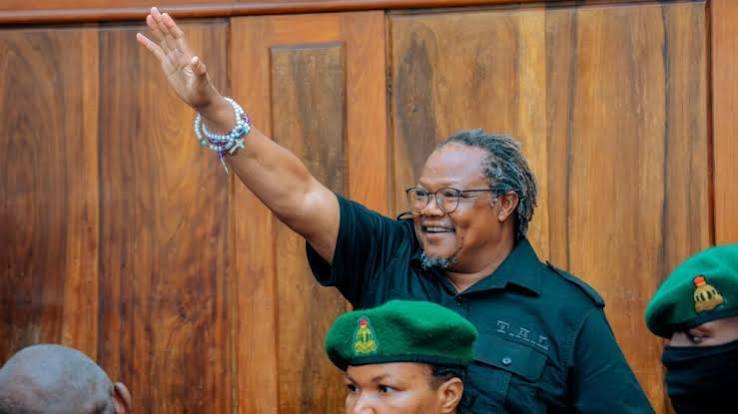
Tanzania’s main opposition party, Chama Cha Demokrasia na Maendeleo (CHADEMA), has described a court ruling involving its detained leader, Tundu Lissu, as a moment of victory after he was acquitted of treason, an offence that could have resulted in the death penalty.
However, the opposition leader was not released. Instead, the High Court in Dar es Salaam sentenced him to four years in prison after finding him guilty of incitement, leaving his political future and freedom uncertain.
The verdict, delivered on November 6, 2026, followed a closely watched trial that attracted international attention and renewed concerns about political rights and the independence of the justice system in Tanzania.
CHADEMA officials welcomed the decision to clear Lissu of treason, although they rejected the remaining conviction and described the proceedings as politically motivated.
CHADEMA describes ruling as a victory
The party’s deputy chairperson, John Heche, said the outcome represented an important moment for the opposition because its leader had avoided conviction on the more serious treason charge.
Heche argued that the case had initially exposed Lissu to the possibility of capital punishment but ended with a conviction for a different offence.
The party nevertheless maintained that the incitement charge was unjustified. CHADEMA representatives said they intended to challenge the four-year sentence through an appeal and would also seek bail while the legal process continued.
The opposition’s reaction reflects the complicated nature of the ruling. Although the court dismissed the charge carrying the possibility of a death sentence, Lissu remains behind bars and faces a substantial prison term.
Why Tundu Lissu was arrested
Lissu was arrested in April 2025, ahead of Tanzania’s presidential election, after making remarks that prosecutors said encouraged supporters to obstruct the electoral process and mobilise resistance.
The prosecution alleged that his statements were intended to disrupt the election and provoke unrest. Lissu denied wrongdoing and argued that his comments were part of legitimate political activity and a campaign for electoral reforms.
He had spent approximately 19 months in detention before the judgment was delivered.
The case was closely connected to CHADEMA’s campaign for changes to Tanzania’s electoral system. The party had demanded fundamental reforms before the 2025 election, using the slogan “No Reforms, No Elections”.
Lissu’s arrest and prosecution became a major issue for the opposition, which argued that legal action against its leadership was restricting political competition.
Four-year sentence raises fresh political questions
Although the court acquitted Lissu of treason, its decision to convict him of incitement created another major challenge for the opposition leader.
According to reports, incitement was not among the original charges in the case. The court nevertheless found him guilty of the offence and imposed a four-year prison sentence.
The judgment could also affect his ability to participate in Tanzania’s next presidential election, scheduled for 2030, if the conviction remains in force.
Lissu strongly rejected the decision. Speaking after the judgment, he described the trial as political persecution and accused the judges of acting under pressure from President Samia Suluhu Hassan’s administration.
He also questioned why he had been convicted of an offence he said he had not originally faced in the proceedings.
These claims reflect Lissu’s position and have not been established as findings of the court. The government has faced wider criticism over its treatment of political opponents, while the authorities have disputed allegations that they are suppressing dissent.
International pressure and human rights concerns
The case has drawn criticism from foreign lawmakers and human rights organisations, with concerns centred on due process, political freedoms and the treatment of opposition figures.
British and European Union lawmakers had previously criticised the prosecution and called for Lissu’s release. They warned that using a capital offence against a political opponent could undermine confidence in the justice system.
The United States ambassador to Tanzania, William Trachman, also said he was following the trial and its wider implications for the rule of law.
Human Rights Watch raised concerns about the proceedings, including delays and Lissu’s complaints that he had been denied private access to his lawyers. The organisation said the treason acquittal did not resolve broader questions about the fairness of the case.
The reaction adds to international scrutiny of Tanzania’s political environment following the disputed atmosphere surrounding the October 2025 election.
Tanzania faces continuing political tensions
President Samia Suluhu Hassan was declared the winner of the 2025 presidential election with nearly 98 per cent of the vote. The poll took place amid opposition complaints, restrictions on political activity and protests.
The unrest that followed the election resulted in significant casualties. A commission appointed by the president reported that at least 518 people were killed, while the government rejected accusations that security forces had used excessive force.
Opposition groups and rights organisations have raised separate allegations about the conduct of security agencies and the treatment of government critics.
Lissu’s trial has therefore become part of a wider debate about political participation, accountability and the protection of civil liberties in the East African country.
For CHADEMA, the court’s decision to dismiss the treason charge offers some relief, but the four-year sentence means its chairman remains unable to return to normal political activity.
The party’s planned appeal and bail application will be important next steps. Until those efforts produce a change in his legal position, Lissu’s imprisonment will continue to shape the opposition’s political strategy and Tanzania’s debate over democratic rights.
The ruling has removed the immediate threat of a death sentence in this case, but it has not ended the legal battle surrounding one of the country’s most prominent opposition figures.