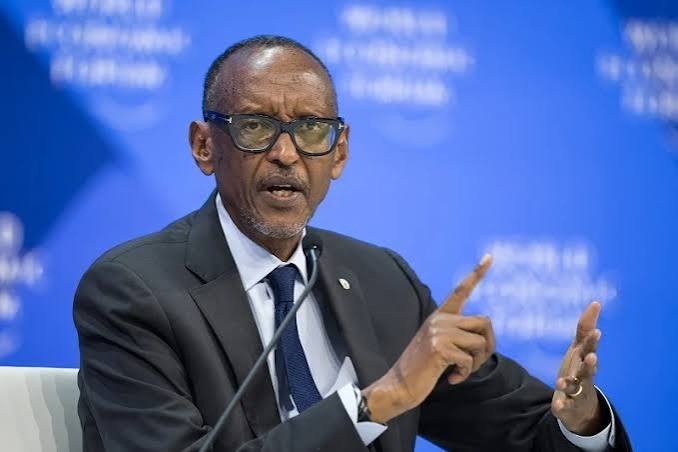
Rwandan President Paul Kagame has called on international investors to reconsider how they assess business opportunities in developing countries, arguing that the perception that economies in the Global South are automatically riskier than wealthier nations could be discouraging investment.
Kagame made the remarks during a high-level discussion at the 28th Commonwealth Heads of Government Meeting (CHOGM) in St John’s, Antigua and Barbuda, on November 2, 2026.
He argued that investment risks exist in every market and should not be used as a blanket reason to overlook commercially viable projects in developing economies.
According to Kagame, the focus should instead be on identifying projects with realistic prospects of profitability and creating partnerships that allow investors and governments to manage potential challenges.
His comments come as many African and other developing economies seek foreign capital to finance infrastructure, expand businesses, create employment and improve living standards.
Kagame questions the North-South investment divide
The Rwandan leader challenged the long-standing assumption that investing in developing countries involves greater risks than putting money into developed economies.
He maintained that uncertainty is part of every investment decision, regardless of the country or region involved. Investors, he suggested, should assess opportunities based on the strength of individual projects rather than make broad judgments about entire economies.
Kagame also argued that a project’s size should not determine whether it attracts financing. A relatively small business venture could still offer attractive returns if its commercial model is sound.
He called for a change in how investors, financial institutions and governments approach opportunities in developing markets, stressing that viable projects should receive serious consideration even when they are located in smaller economies.
The president also advocated cooperation among countries and the pooling of financial resources and expertise to help manage investment risks.
Such partnerships, he suggested, could make it easier to support projects that might struggle to secure funding when assessed only within the boundaries of a single country.
Regional integration could expand investment opportunities
Kagame identified regional market integration as another important factor in attracting investment.
He argued that businesses operating in smaller economies should not be restricted to serving their domestic markets. Access to neighbouring countries and wider regional markets could increase the number of potential customers, improve business prospects and make projects more attractive to investors.
For African countries, this argument has particular relevance as governments pursue regional trade and economic integration.
The African Continental Free Trade Area (AfCFTA), for example, is intended to create a larger market by reducing trade barriers and encouraging the movement of goods and services across the continent.
A more connected African market could give businesses opportunities to expand beyond national borders, potentially improving the commercial case for investments in manufacturing, agriculture, technology, energy and infrastructure.
However, regional integration also requires practical improvements in transport networks, customs procedures, trade regulations and access to finance.
Kagame stressed that governments have an important role in establishing the policies and institutions needed to support investment and make cross-border business activity easier.
Strong institutions and governance remain important
Beyond changing investor perceptions, Kagame highlighted the need for effective government institutions and sound policies.
He said countries must create conditions that allow businesses to operate, grow and attract capital. This includes building stronger institutions and improving cooperation between the public and private sectors.
For investors, the quality of a country’s regulatory environment, public administration and economic policies can influence decisions about where to commit capital.
Governments seeking foreign investment therefore face the task of demonstrating that projects can operate under clear rules and that businesses can plan for the long term.
Kagame’s comments also placed responsibility on Commonwealth governments to work together rather than approach investment challenges in isolation.
The Commonwealth, he suggested, could help strengthen cooperation and encourage partnerships that make investment opportunities across member countries more accessible.
Investment seen as a route to jobs for young people
The Rwandan president also connected investment to employment and skills development, particularly for young people.
He argued that developing economies need capital to create businesses, expand production and provide opportunities for young people to acquire practical skills.
Investment in productive sectors can support job creation while helping workers gain experience and develop capabilities needed by growing industries.
For many African countries, this is an important economic priority as large numbers of young people enter the labour market each year.
Kagame’s position was that attracting investment should not be viewed only as a way to increase financial inflows. It should also contribute to economic activity, workforce development and opportunities for future generations.
Other Commonwealth leaders highlight development priorities
The discussion also featured Jamaican Prime Minister Andrew Holness and Samoa’s Deputy Prime Minister, Mulipola Anarosa Ale Molioʻo.
Holness focused on the impact of inefficient public institutions and bureaucratic delays on development. He argued that governments must improve institutional performance, noting that administrative inefficiency can slow progress even when funding is available.
He also highlighted the potential role of technology and artificial intelligence in improving public services, while emphasising the importance of fairness and equity.
Molioʻo, meanwhile, stressed that smaller countries can make meaningful contributions to the international community. She argued that a country’s influence should not be measured solely by its geographical size or economic strength.
The 28th Commonwealth Heads of Government Meeting is taking place from November 1 to 4, 2026, under the theme, “Accelerating Partnerships and Investment for a Prosperous Commonwealth.”
The gathering brings together leaders from the organisation’s 56 member countries, alongside representatives of governments, businesses, civil society and youth groups.
Discussions are centred on strengthening trade, attracting investment and developing partnerships that can support economic growth.
Kagame’s intervention placed the spotlight on how developing economies are assessed by global investors. His central argument was that investment decisions should be guided by the commercial potential of projects, supported by stronger institutions, regional cooperation and policies that allow businesses to grow.