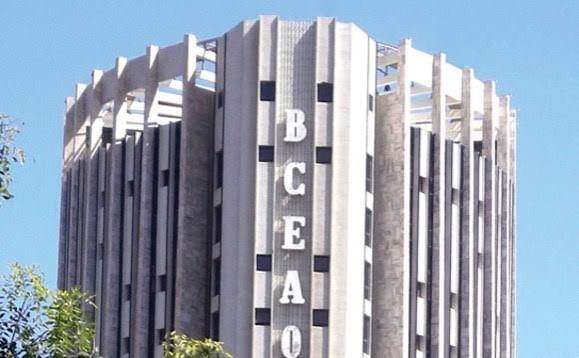
The Central Bank of West African States (BCEAO) has introduced new pricing rules for electronic money transfers across the West African Economic and Monetary Union (UEMOA), with the changes taking effect on November 2, 2026.
The new framework is designed to make digital payments more accessible, reduce the cost of smaller transactions and improve connections between banks, mobile money operators and other financial institutions.
Under the revised rules, individuals sending money within their own country will enjoy free transfers when their combined daily transactions do not exceed 8,000 CFA francs per participating institution.
However, transfers exceeding that threshold may attract charges ranging from zero to 0.8% of the amount transferred, excluding tax.
The BCEAO has also confirmed that receiving money will remain free, regardless of the amount received or the number of transactions.
The changes apply to participating financial institutions across the eight UEMOA member countries: Benin, Burkina Faso, Côte d’Ivoire, Guinea-Bissau, Mali, Niger, Senegal and Togo.
Small domestic transfers to remain free
One of the major changes under the new pricing structure is the introduction of a daily threshold for free domestic transfers between individuals.
Customers can send a combined amount of up to 8,000 CFA francs per day without paying transfer fees, provided the transactions are processed through the BCEAO’s Interoperable Instant Payment System, known as PI-SPI.
The free allowance applies to the total amount transferred throughout the day rather than separately to each transaction.
This means customers can divide the permitted amount into several smaller payments without losing the benefit of free transfers.
For example, someone sending 3,000 CFA francs in the morning and another 5,000 CFA francs later in the day would reach the daily free-transfer threshold.
The BCEAO estimates that the 8,000 CFA franc limit will cover approximately 75% of electronic money transactions across the monetary union.
The measure is intended to support individuals who regularly use mobile money for everyday payments, family support and small financial transactions.
Transfers above 8,000 CFA francs may attract charges
Although smaller transfers will benefit from the revised arrangement, the central bank has allowed financial institutions to introduce charges once a customer’s combined daily sending amount exceeds 8,000 CFA francs.
The applicable rate must fall between zero and 0.8% of the transfer amount before tax.
This means participating banks, mobile money operators and payment institutions can decide whether to charge customers for transactions above the threshold, provided their fees remain within the limits established by the BCEAO.
The new framework does not impose a compulsory 0.8% fee on every transaction exceeding the free allowance.
Instead, it establishes the maximum permitted rate, leaving providers room to determine their pricing arrangements.
The distinction is important for customers because the actual cost of sending larger amounts may differ between financial service providers.
Receiving money remains free
Another important provision of the new rules concerns people receiving electronic transfers.
According to the BCEAO, incoming transfers between individuals will remain free, without restrictions on the amount received or the number of transactions.
This means customers will not be charged simply because money enters their accounts through the PI-SPI system.
The decision is expected to benefit individuals who regularly receive financial support from relatives, friends and business contacts.
It also provides a clearer distinction between the cost of sending money and receiving funds under the revised payment arrangements.
PI-SPI becomes mandatory for interoperable transactions
The new pricing framework is accompanied by a major change to how electronic money transfers are processed across UEMOA.
From November 2, interoperable electronic money transactions within the union must be conducted through the BCEAO’s Interoperable Instant Payment System.
PI-SPI was launched on September 30, 2025, to connect different financial institutions and make it possible for customers to transfer money across separate payment networks.
Before the development of a common infrastructure, customers could face difficulties when sending money between accounts held by different banks or mobile money providers.
The new system is intended to reduce these barriers by providing a shared payment infrastructure for participating institutions.
According to information released by the BCEAO, PI-SPI had connected 175 participating institutions by the end of September 2026, providing access to instant payment services for more than 38 million people.
The participants include commercial banks, electronic money institutions, payment service providers and microfinance institutions.
Customers can access the system through the channels provided by their financial institutions, including mobile applications, websites and USSD services.
Cross-border transfers to receive similar treatment in 2027
The revised rules will not immediately extend the same pricing arrangement to transfers between different UEMOA countries.
The BCEAO has scheduled the alignment of cross-border transfer charges with domestic pricing conditions for June 1, 2027.
Once that provision takes effect, transfers between participating institutions in different member countries will follow the same pricing conditions established for domestic transactions.
For example, customers sending money between participating accounts in Benin and Côte d’Ivoire will benefit from the regional pricing arrangement once the June 2027 deadline arrives.
The planned change could make regional financial transactions more affordable and encourage greater use of digital payment services across West Africa.
It is also expected to strengthen economic connections between countries that share the CFA franc and operate under the same monetary framework.
What the new rules mean for mobile money users
The changes will affect customers who rely on mobile money and digital financial services for regular transactions.
People making small domestic transfers could benefit from reduced costs, particularly when their combined daily payments remain within the 8,000 CFA franc allowance.
However, customers sending larger amounts should check the charges applied by their individual financial service providers.
The new rules also make it important to understand that the free-transfer provisions concern qualifying transfers between individuals. They should not automatically be interpreted as making every payment to a business or merchant free.
Similarly, the new arrangement does not mean that cash withdrawals, agent services or every other mobile money transaction must become free.
Customers should therefore consult their banks or mobile money operators for information about charges that fall outside the BCEAO’s specific transfer rules.
BCEAO seeks wider financial inclusion
The reform forms part of the central bank’s broader efforts to modernise payment infrastructure and encourage financial inclusion across the West African monetary union.
By reducing charges on smaller transactions and requiring interoperable transfers to pass through a shared system, the BCEAO hopes to make digital payments more accessible to people who depend on mobile financial services.
The policy could also encourage competition among financial service providers as they adjust their products and pricing structures to the new framework.
However, the success of the initiative will depend on how effectively participating institutions implement the rules, maintain reliable services and communicate the changes to customers.
For millions of mobile money users across Benin, Senegal, Côte d’Ivoire and other UEMOA countries, November 2 marks an important change in how domestic electronic transfers are priced and processed.
The next major milestone will come in June 2027, when the revised pricing conditions are scheduled to extend to cross-border transfers throughout the monetary union.