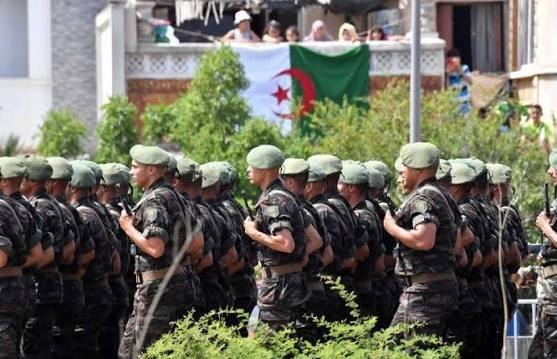
Algeria has approved a plan to send army personnel to neighbouring Niger, marking a major change in its military policy and a new phase in security cooperation between the two North African and Sahelian countries.
The Algerian parliament endorsed the deployment on October 25, 2026, authorising military units to operate in northern Niger. If carried out, the mission would be Algeria’s first overseas troop deployment since its forces supported Egypt during the 1973 Arab-Israeli war.
The decision comes as both governments seek to strengthen their relationship after a period of diplomatic tension. It also reflects growing concern about security threats across the Sahel, where armed groups linked to al-Qaeda and the Islamic State continue to challenge government forces.
The proposed mission has a strategic dimension beyond security. Algeria has energy investments in Niger and is involved in plans to develop a major gas export route connecting Nigeria, Niger and Algeria.
Parliament clears the way for overseas deployment
The deployment received approval from both chambers of Algeria’s parliament, completing the required legislative process for sending military personnel outside the country. The decision was put forward by President Abdelmadjid Tebboune and was presented as a measure connected to bilateral cooperation and the protection of strategic interests.
Under the plan, Algerian army units are expected to operate in the Madama area of northern Niger, close to the Libyan border. The location is strategically important because it lies in a remote border region where security challenges include militant activity, trafficking and cross-border movements.
However, the precise deployment date and the number of soldiers involved had not been officially announced in the reports available on October 25. A Nigerien security source also indicated that the troops had not yet been formally deployed at the time of reporting.
The proposed operation is therefore an approved deployment plan, rather than confirmation that Algerian forces have already begun their mission inside Niger.
Why Algeria is sending troops to Niger
One of the main reasons behind the deployment is the protection of energy infrastructure and other strategic investments. Algeria’s state-owned energy company, Sonatrach, has interests in Niger’s oil sector, while both countries are working alongside Nigeria on the proposed Trans-Saharan Gas Pipeline.
The pipeline is intended to transport natural gas from Nigeria through Niger to Algeria, creating a potential route for supplying European and other international markets. Its development would depend on extensive infrastructure, cross-border coordination and long-term security across the region.
Algerian officials and lawmakers have linked the troop deployment to protecting these economic interests and implementing agreements between the two governments. The mission is consequently being presented as a way to safeguard strategic assets, rather than simply as a conventional combat operation.
Energy cooperation is particularly significant for Algeria, a major gas producer seeking to protect its position in international markets. For Niger, cooperation could support the development of its oil and energy sectors while strengthening relations with a neighbouring country that has considerable military and diplomatic influence.
Niger’s security challenges add urgency
Niger continues to face serious security threats from armed groups operating across the Sahel. Militant organisations associated with al-Qaeda and Islamic State have carried out attacks in the wider region, placing pressure on national armies and disrupting communities and economic activity.
The security situation is complicated by the region’s vast desert terrain and porous borders, which can make it difficult for authorities to monitor movement and respond quickly to attacks.
Algeria shares a long border with Niger and has traditionally viewed stability in the Sahel and Sahara as essential to its own national security. A stronger military relationship with Niamey could therefore give Algiers a more direct role in protecting its southern strategic interests.
The deployment could also strengthen cooperation against cross-border crime, trafficking and extremist violence. However, the exact responsibilities of the proposed Algerian force, including whether its duties will be limited to protecting installations or extend to other security activities, have not been fully detailed publicly.
The mission’s effectiveness will depend on how the two countries coordinate their forces and define the operation’s limits.
Algeria and Niger move beyond diplomatic tensions
The planned deployment follows a gradual improvement in relations between Algiers and Niamey after disagreements over Niger’s 2023 military coup and a later diplomatic dispute involving the downing of a Malian drone near Algeria’s border.
Algeria initially opposed the coup that brought Niger’s current military authorities to power. Relations subsequently deteriorated, with diplomatic tensions involving Niger and its Sahelian allies. More recently, both governments have taken steps to rebuild ties through high-level visits and security discussions.
Nigerien President Abdourahamane Tiani visited Algiers in February 2026, while Defence Minister Salifou Modi travelled to Algeria in October for discussions with senior officials. The two countries also signed a military cooperation protocol during the latest round of engagement.
These developments suggest that the relationship is becoming more practical, with security and economic cooperation taking a more prominent place in bilateral ties.
For Algeria, the move also represents a notable departure from its longstanding reluctance to deploy troops abroad. Sending military personnel into Niger would give the country a more direct presence in regional security affairs at a time when traditional diplomatic approaches face growing pressure.
What the deployment could mean for West Africa
The decision could have wider implications for regional security, particularly as countries across the Sahel reassess their international partnerships and military arrangements.
Niger, Mali and Burkina Faso are governed by military-led authorities and have strengthened their cooperation through the Alliance of Sahel States. Their governments have also sought to reshape their relationships with external partners while responding to persistent militant attacks.
Algeria’s proposed deployment could create another layer of security cooperation in a region where competing interests, energy projects and counterterrorism efforts increasingly overlap.
For Nigeria, the planned gas pipeline makes the development particularly relevant. The project depends on cooperation across national borders, and instability along its proposed route could complicate construction, investment and future gas transportation. Closer coordination between Algeria and Niger may help protect the infrastructure, although the troop deployment alone cannot guarantee the project’s success.
The move could also attract attention from other countries seeking influence in the Sahel. Analysts have described the decision as a shift towards a more direct expression of Algeria’s regional interests, even as the country maintains its stated commitment to established foreign policy principles.
A significant step, with details still to come
Algeria’s parliamentary approval marks an important moment in its relations with Niger and its approach to military engagement beyond its borders. The planned mission combines security concerns with the protection of energy investments and a broader effort to rebuild bilateral cooperation.
Still, several key details remain outstanding, including the number of troops, the timing of their arrival and the full scope of their duties.
The next stage will show whether the deployment remains focused on protecting strategic facilities or becomes part of a wider security partnership. Either way, the decision signals that Algeria is prepared to take a more direct role in safeguarding its interests in the Sahel after more than five decades without a comparable overseas troop deployment.