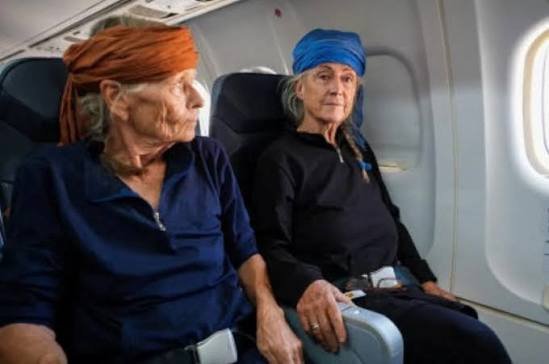
Two European women who were abducted separately in Niger in 2025 have been released after spending more than a year and a half in captivity, bringing relief to their families and governments.
The women, identified in media reports as Swiss national Claudia Abbt, 69, and Austrian citizen Eva Gretzmacher, 76, arrived in Benghazi, eastern Libya, following their release. Authorities in Switzerland and Austria confirmed the developments on Thursday, October 22, 2026.
Their freedom followed months of diplomatic efforts and cooperation between officials in their home countries and international partners. However, the governments have not publicly disclosed full details of the operation or the circumstances surrounding their release.
Separate Abductions in Niger
Both women were living in Agadez, a city in northern Niger, when they were kidnapped in separate incidents.
Gretzmacher was abducted on January 11, 2025, while Abbt was taken on April 13 of the same year, according to statements and reports published after their release.
The abductions kept their families and authorities waiting for many months, as efforts continued behind the scenes to secure their safe return. No group has publicly claimed responsibility for either kidnapping, and the identities of those who held the women remain unclear.
Some security analysts and media reports have suggested possible links to extremist groups operating in the Sahel. However, there has been no publicly confirmed attribution establishing who was responsible for the abductions.
Switzerland and Austria Confirm Their Release
Switzerland’s Foreign Ministry confirmed that its citizen had been freed and met by Swiss federal officials in Benghazi.
The ministry said Abbt received medical attention after her release and was doing reasonably well given the circumstances. She was subsequently preparing to return to Switzerland.
Swiss Foreign Minister Ignazio Cassis expressed relief over the development and thanked the people and institutions involved in securing her freedom. Swiss authorities had previously established a special task force involving police and intelligence personnel to coordinate efforts to bring her home.
Austria also confirmed Gretzmacher’s release, saying she was received by an Austrian crisis response team on October 22.
Foreign Minister Beate Meinl-Reisinger described the outcome as a moment of considerable relief after more than 21 months of uncertainty. She credited sustained diplomatic engagement and discreet cooperation with regional, European and international partners.
Vienna said the process had been lengthy and sensitive, requiring close coordination to reach a safe outcome.
Libya’s Role in the Operation
The women reached Benghazi, a major city in eastern Libya, after being transported out of Niger. Reports from Libyan media and international news organisations linked the operation to military commander Khalifa Haftar and his son Saddam Haftar, who holds a senior position within the eastern Libyan military structure.
In a video broadcast by the eastern-based Al-Masar television channel, the two women appeared tired but confirmed their identities and expressed gratitude to the Libyan figures they credited with helping secure their freedom.
A security source cited by AFP said the women had spent part of their captivity in northern Mali before the operation that led to their release. Nevertheless, authorities have not provided a comprehensive public account of where they were held throughout the ordeal or how the final negotiations unfolded.
The reported involvement of eastern Libyan authorities is significant because Libya remains politically divided. Since the 2011 overthrow of longtime leader Muammar Gaddafi, rival administrations and power centres have competed for influence across the country.
Benghazi is controlled by forces aligned with Haftar, while a United Nations-recognised government operates from Tripoli in western Libya. This fragmented political landscape can complicate cross-border security cooperation, particularly in cases involving armed groups and hostage-taking.
Niger’s Continuing Security Challenges
The kidnappings also highlight the security difficulties confronting Niger and other countries across the Sahel, a region stretching across parts of Africa south of the Sahara.
Niger has faced attacks by armed extremist organisations, including groups affiliated with al-Qaeda and the Islamic State. The wider insurgency has affected neighbouring Mali and Burkina Faso, contributing to displacement, insecurity and disruption to economic activity.
Foreign nationals and aid workers can face heightened risks in areas where armed groups operate and state security forces have limited reach. Agadez, where both women were reportedly living when they were abducted, is an important northern Nigerien city with links to Saharan trade and travel routes.
Although extremist groups have been mentioned in reporting about the case, the absence of a confirmed claim of responsibility means it remains unclear whether the kidnappings were politically motivated, financially driven or connected to a specific organisation.
The releases therefore represent a significant outcome for the two women and their families, but they do not resolve the broader security concerns affecting the region.
Governments Thank Partners as Details Remain Limited
Swiss and Austrian officials have largely kept the details of their efforts confidential, citing the sensitive nature of the operation and the need to protect the people involved.
Switzerland said it would not release further information about its citizen’s case for privacy reasons. Austria, meanwhile, emphasised the importance of cooperation with international partners throughout the lengthy process.
The limited information available leaves several questions unanswered, including the precise terms under which the women were released and the identities of their captors. No official account has established whether a ransom or other concessions were involved.
For now, the priority for both governments is the women’s safe return and recovery after an extended period of captivity. Their release brings an end to months of uncertainty and underscores the importance of diplomatic coordination in hostage cases involving several countries.
The episode also serves as a reminder of the risks faced by civilians in areas affected by armed conflict and weak security, as well as the challenges governments encounter when trying to secure the release of citizens held abroad.