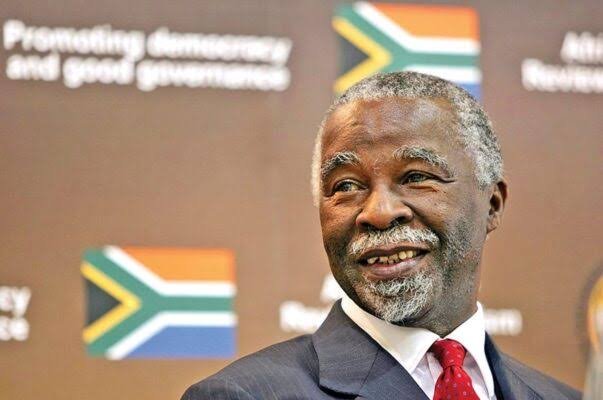
Former South African President Thabo Mbeki has rejected allegations that he used his position in government to obstruct investigations and prosecutions of crimes committed during apartheid, insisting that claims of a secret arrangement to protect former security officials are false.
Mbeki made the denial on Monday, October 19, 2026, while testifying before a judicial inquiry in Johannesburg investigating why numerous cases referred for prosecution by South Africa’s Truth and Reconciliation Commission (TRC) were left unresolved.
The former president, who led South Africa from 1999 to 2008 after succeeding Nelson Mandela, said he never instructed or authorised prosecutors to abandon cases involving alleged apartheid-era abuses. He also denied entering into any secret agreement with former military and police officials to shield them from criminal accountability.
The inquiry has renewed attention on a painful chapter in South African history, with victims’ families demanding answers about why so few cases arising from apartheid-era human rights violations resulted in successful prosecutions.
Mbeki Rejects Allegations of Political Interference
During his testimony, Mbeki challenged claims that his administration had deliberately blocked legal action against individuals accused of crimes under the former white-minority government.
He argued that decisions about whether to prosecute criminal cases belonged to the National Prosecuting Authority (NPA), rather than the president or cabinet.
Mbeki said the government had not adopted a policy to suppress investigations into cases referred by the TRC. He maintained that the prosecuting authority should explain why many of those cases failed to progress through the justice system.
The allegations under examination include claims that Mbeki participated in discussions intended to establish a way for former apartheid-era generals and police officials to avoid prosecution.
He dismissed the suggestion that such talks were designed to secure secret immunity, describing the allegations as fabricated. Mbeki acknowledged that discussions with former security officials had taken place, but said their purpose was different from the arrangement alleged by critics.
The inquiry is examining the allegations rather than announcing a final finding on Mbeki’s responsibility. His testimony represents his response to claims that remain part of the broader investigation.
Why the Truth and Reconciliation Commission Cases Remain Unresolved
South Africa established the Truth and Reconciliation Commission in the 1990s to investigate human rights abuses committed during apartheid and help the country address its violent past.
The commission, chaired by Archbishop Desmond Tutu, offered conditional amnesty to perpetrators who fully disclosed politically motivated crimes. However, those who did not receive amnesty, or who did not apply for it, could still face prosecution.
The process was intended to balance truth-telling and national reconciliation with accountability. Yet, decades after the commission completed its work, many victims’ families are still waiting for criminal cases to be resolved.
According to an NPA-commissioned review, approximately 300 cases were referred for further investigation and possible prosecution, but only a small number led to successful prosecutions. Missing evidence, the deaths of witnesses and suspects, and allegations of political interference have complicated efforts to bring those responsible to justice.
The limited progress has prompted criticism of successive governments led by the African National Congress (ANC), the liberation movement that came to power following the end of apartheid in 1994.
Critics argue that the emphasis on national reconciliation came at the expense of accountability for serious crimes, including killings, disappearances and other human rights violations.
Victims’ Families Demand Answers
The inquiry follows legal action by survivors and relatives of apartheid-era victims who say successive administrations failed to ensure that unresolved cases were properly investigated.
The Foundation for Human Rights and 25 families of victims and survivors have called for a clear explanation of why many cases did not result in prosecutions.
The foundation’s executive director, Zaid Kimmie, said families wanted an honest account of the delays after years of waiting for justice.
For many relatives, the issue extends beyond criminal convictions. They want to know what happened to loved ones who were killed or disappeared, who was responsible, and whether officials failed to act on evidence that could have supported prosecutions.
The case is also deeply personal for Mbeki. During his testimony, he referred to unanswered questions surrounding the disappearance of his brother, Jama Mbeki, and his son, Kwanda Mbeki, during the apartheid era. He argued that the country must establish why prosecutions failed to proceed.
The inquiry is therefore examining not only allegations against political leaders but also the wider institutional failures that may have prevented cases from reaching court.
Dispute Over Mbeki’s 2003 Parliamentary Statement
One issue under scrutiny is an address Mbeki delivered to Parliament in April 2003 in response to the Truth and Reconciliation Commission’s final report.
In that speech, he discussed the possibility of prosecutors working with intelligence agencies to obtain information from people who could help clarify past crimes.
Critics have argued that the remarks could have opened the door to political arrangements that weakened efforts to prosecute apartheid-era offences.
Mbeki rejects that interpretation. He says his comments did not authorise a policy of interference and that they did not give perpetrators blanket immunity from prosecution.
He has also argued that presidential pardons apply to people who have already been convicted and are distinct from decisions about whether investigations and prosecutions should proceed.
The inquiry is expected to examine the context of these decisions and the extent to which political authorities influenced, or failed to influence, the handling of the cases.
Its findings could help clarify the responsibilities of the executive, prosecutors and other institutions in dealing with crimes inherited from the apartheid period.
Inquiry Examines Wider Government Responsibility
The investigation is not limited to Mbeki’s years in office. It also covers the period under his successor, former President Jacob Zuma, amid allegations that efforts to pursue apartheid-era cases were obstructed over several years.
Both Mbeki and Zuma unsuccessfully challenged the continued involvement of retired Constitutional Court Justice Sisi Khampepe as chair of the inquiry. The Constitutional Court dismissed their challenge, allowing the proceedings to continue.
The inquiry is also taking place against a backdrop of renewed investigations into high-profile deaths from the apartheid era.
Authorities have reopened inquests into the deaths of anti-apartheid activist and Nobel Peace Prize laureate Albert Luthuli in 1967, lawyer Griffiths Mxenge in 1981, and activist Steve Biko, who died in police custody in 1977.
These cases remain important to families and campaigners seeking fuller explanations of state violence during apartheid and accountability for those involved.
The inquiry’s work could influence how South Africa addresses other unresolved cases and whether further investigations or prosecutions are pursued.
What Happens Next?
Mbeki’s testimony is one stage in a broader process intended to establish why cases referred by the Truth and Reconciliation Commission did not lead to more prosecutions.
Further testimony from former government officials is expected as the inquiry investigates the handling of the cases and allegations of political interference. Former President Jacob Zuma’s appearance, which had initially been scheduled for later in the week, was postponed to a date yet to be confirmed in reports published on October 19.
The inquiry’s eventual findings could be significant for South Africa’s justice system, particularly if they identify failures by public institutions or establish that decisions were made to obstruct investigations.
For the families of victims, the central issue remains whether the country can provide credible answers about crimes that have gone unresolved for decades.
Mbeki has firmly denied ordering a cover-up and says the National Prosecuting Authority must account for its handling of the cases. The inquiry must now assess the evidence and testimony before reaching its conclusions.
The proceedings have reopened a difficult national debate about the balance between reconciliation and justice after apartheid. More than three decades after the transition to democracy, the outcome may help determine whether some of the country’s longest-standing questions about its past can finally be answered.