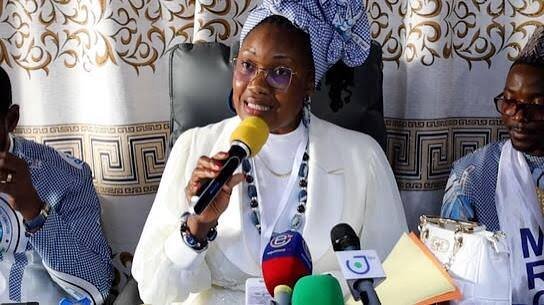
Cameroon’s opposition politics has entered a new chapter following the election of Tiriane Balbine Noah as president of the Cameroon Renaissance Movement (MRC). Her victory marks a historic milestone for the party, as she becomes the first woman to lead the prominent opposition group.
Noah was elected during an extraordinary party congress held in Yaoundé on Saturday, October 17, 2026. She succeeds Professor Maurice Kamto, who led the party for approximately 14 years before stepping down in September.
Her emergence comes at a critical moment for the MRC, which faces political challenges, questions about its future direction and preparations for the next round of local elections in Cameroon.
The leadership change is also significant for the party’s supporters, who hope the new administration will strengthen internal unity and preserve the organisation’s influence within the country’s opposition movement.
Tiriane Noah Wins MRC Leadership Election
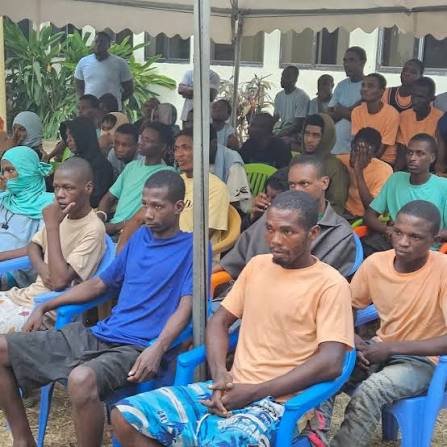
Delegates from across the MRC gathered at the party’s headquarters in Yaoundé to select a successor to Kamto. The extraordinary congress took place amid reported tensions surrounding the party’s activities and efforts to secure approval for the meeting.
According to reports, approximately 1,200 delegates participated in the gathering, which provided an opportunity for the party to establish a new leadership structure following Kamto’s resignation.
Noah, who previously served as one of the party’s national vice-presidents, had been overseeing its affairs in an acting capacity since the leadership transition.
She secured the presidency after her remaining challenger withdrew from the contest, leaving her as the sole candidate.
Reports from Cameroon put her share of the vote at more than 96 per cent, reflecting overwhelming support among participating delegates.
Her election gives her a renewable five-year mandate to lead the party and determine its political priorities during a period of uncertainty for the opposition movement.
Who Is Tiriane Balbine Noah?
Tiriane Balbine Noah is a prominent member of the Cameroon Renaissance Movement who rose through the party’s leadership ranks before becoming its interim president.
Her experience within the organisation positioned her as a key figure during the period following Kamto’s departure.
As a former vice-president, Noah was familiar with the party’s internal structure, political challenges and relationship with its supporters.
Her appointment represents both continuity and change for the MRC. While she inherits an organisation built under Kamto’s leadership, she must also establish her own authority and demonstrate how the party can remain politically relevant under new management.
Becoming the first woman to occupy the position also gives her election broader significance within Cameroon’s political landscape.
However, the importance of her appointment will ultimately depend on her ability to translate the historic achievement into effective leadership, stronger party organisation and meaningful political participation.
Maurice Kamto’s Departure Marks a Turning Point
Noah’s election follows the resignation of Maurice Kamto, the veteran opposition figure who played a central role in establishing and developing the MRC.
Kamto led the party for about 14 years, becoming one of the most recognisable figures in Cameroon’s opposition politics.
His departure created the need for a leadership transition and raised questions about the organisation’s future.
According to reports, Kamto and his deputy stepped aside amid concerns about the party’s continued survival and allegations of pressure against the organisation.
The circumstances surrounding the leadership change have added to the significance of Noah’s appointment.
She now faces the task of maintaining the political identity established under Kamto while responding to the challenges confronting the party.
Her ability to retain the confidence of senior officials, grassroots members and ordinary supporters will be important as the MRC enters this new phase.
MRC Raises Concerns About Political Restrictions
The congress also provided an opportunity for party members to express concerns about the difficulties they say the MRC has encountered in exercising its political rights.
Joseph Emmanuel Ateba, the party’s national secretary responsible for party reform, welcomed the opportunity to hold the meeting after the authorisation required for the gathering was obtained.
His remarks reflected the party leadership’s position that political participation has been difficult for the organisation.
Supporters who attended the congress also viewed the gathering as an opportunity to reaffirm their commitment to the party despite the challenges surrounding its activities.
Nevertheless, the political environment remains an important factor in determining how effectively the new leadership can operate.
For Noah, maintaining the party’s organisational stability while navigating its relationship with the authorities will be among the issues requiring attention.
Noah Pays Tribute to MRC Members
In her address to the congress, Noah acknowledged party members who, according to her, had suffered personal losses and other hardships because of their political involvement.
She highlighted the sacrifices made by activists who had faced threats to their freedom, security and personal well-being.
Her remarks also recognised Kamto’s contribution to the party and the values associated with his leadership.
The tribute suggested that Noah intends to build on the organisation’s existing political legacy rather than completely distance herself from its past.
For the new president, recognising the experiences of party members could also help strengthen internal solidarity as the organisation adjusts to its leadership transition.
However, maintaining that unity will require more than symbolic gestures. The new administration will need to address internal disagreements, strengthen party structures and establish a clear direction for the years ahead.
2027 Local Elections Become a Major Priority
One of the most important challenges facing Noah is preparing the MRC for the next local elections, expected in 2027.
The elections could provide the party with an opportunity to strengthen its presence in local government and demonstrate its ability to mobilise supporters.
To achieve this, the new leadership will need to organise its grassroots structures, maintain communication with party members and develop a strategy capable of competing in the country’s political environment.
The party must also decide how best to address the challenges that have affected its political participation in recent years.
Noah’s leadership will therefore be assessed not only by the circumstances of her election but also by the decisions she makes as the party prepares for the next electoral cycle.
A successful transition could help the MRC preserve its position as a significant opposition force. However, disagreements within the party or continued political obstacles could complicate its efforts.
What Noah’s Election Means for Cameroon’s Opposition
The emergence of a female president at the head of the MRC represents a notable development in Cameroon’s political history.
It places Noah at the centre of a movement that must balance the preservation of its established identity with the need to adapt to changing political circumstances.
Her election could also encourage wider discussions about women’s participation in political leadership in Cameroon.
However, the broader impact of the development will depend on how the new administration performs and whether it can strengthen the party’s influence beyond its existing support base.
For now, Noah inherits a party with an established political identity, a loyal group of supporters and significant organisational challenges.
Her immediate priorities will include consolidating her authority, maintaining internal cohesion and preparing the MRC for the 2027 local elections.
Tiriane Balbine Noah’s election as the first female president of the Cameroon Renaissance Movement marks a historic transition for one of the country’s major opposition parties.
By succeeding Maurice Kamto, she assumes responsibility for guiding the MRC through a politically sensitive period while preparing it for future electoral contests.
Her five-year mandate offers an opportunity to strengthen the organisation and establish a new phase of leadership. Whether she can turn that opportunity into lasting political progress will become clearer as her administration begins its work.