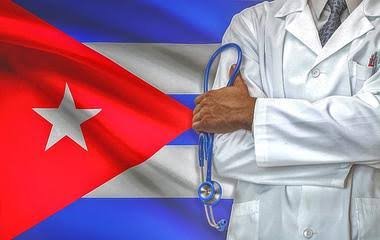
A growing employment crisis among doctors trained through South Africa’s long-running medical partnership with Cuba has raised fresh questions about healthcare funding and workforce planning in the country.
At least 24 doctors in the Eastern Cape who completed their medical education through the Nelson Mandela-Fidel Castro programme remain without jobs, despite persistent staffing pressures in public hospitals and clinics, according to the Eastern Cape Department of Health.
The situation has left some graduates frustrated after spending years completing medical training, internships and compulsory community service with the expectation that they would eventually contribute to South Africa’s public healthcare system.
Doctors Caught Between Vacancies and Funding Shortfalls
The problem appears to be less about a lack of medical vacancies and more about whether those positions have sufficient government funding attached to them.
South Africa has been facing a broader mismatch between the number of qualified doctors seeking employment and the number of positions that provincial health departments can afford to fill.
In the Eastern Cape, doctors who completed their training through the Cuban programme have reportedly spent years applying for positions and attending recruitment interviews, only to discover that some advertised or discussed posts do not have confirmed funding.
The situation has created a particularly difficult position for graduates who believed their government-sponsored training would lead naturally into employment within the public health system.
Some affected doctors have reportedly been searching for work for as long as three years after completing their required training and community service.
Government Spent Millions on Cuban Medical Training
The Nelson Mandela-Fidel Castro programme was established in 1996 as a partnership between South Africa and Cuba.
Its purpose was to expand the country’s pool of doctors, particularly by providing opportunities to students from rural, working-class and historically disadvantaged communities.
The South African government says the programme was designed to address shortages of doctors in underserved communities and strengthen the country’s public healthcare system. More than 3,200 doctors have graduated through the initiative since it began.
The programme requires students to return to South Africa after their studies and undertake service obligations linked to the period for which their education was funded.
According to the report on the current Eastern Cape situation, approximately R17.9 million has been spent on the programme over the past four years.
However, the employment difficulties faced by some graduates have raised concerns about whether investment in medical education is being matched by sufficient funding for healthcare positions.
A Decade of Training, Then No Job
For some graduates, the frustration is particularly intense because becoming a doctor through the programme requires many years of preparation.
Doctors interviewed about the situation described completing lengthy university training, followed by internship and community service, before discovering that opportunities to enter the public service were limited by budget constraints.
One affected doctor said graduates had made significant personal sacrifices, including spending years away from their families, because they expected to return home and serve their communities.
Another doctor said the repeated recruitment process had become discouraging because applicants could be interviewed for positions that ultimately could not be filled because funding had not been secured.
The situation has become so discouraging for some graduates that leaving medicine altogether has reportedly entered their calculations.
South Africa Faces a Wider Doctor Employment Problem
The difficulties facing the Cuba-trained doctors are part of a much larger problem affecting South Africa’s medical workforce.
Recent reporting has highlighted a contradiction within the country’s healthcare system: hospitals and clinics continue to experience staff shortages, while qualified doctors struggle to secure funded positions.
The issue has been described as a workforce-planning problem because vacancies can exist on paper without having the budget necessary to employ someone.
Earlier figures showed more than 1,500 medical positions were vacant nationally, while the Department of Health acknowledged difficulties in tracking the exact number of unemployed doctors.
This means that the challenge cannot simply be solved by producing more medical graduates.
Without sufficient funding for salaries and approved posts, newly qualified doctors may remain unemployed even when health facilities require additional medical staff.
Programme Has Also Produced Successful Doctors
Despite the current controversy, the Cuba-South Africa medical programme has produced doctors who have gone on to establish careers across the country’s health sector.
A 2019 study examining 20 Cuban-trained South African doctors found that all participants were working in South Africa at the time of the research. Nineteen had fulfilled their obligations to serve in rural areas, while many remained committed to working in the country over the long term.
More recent profiles have also highlighted former beneficiaries who have progressed into senior positions within South Africa’s healthcare system.
The latest unemployment figures therefore do not necessarily mean that the entire programme has failed. Instead, they highlight a growing concern about what happens after government-funded medical training is completed.
Questions Over Value for Money
The employment crisis has nevertheless intensified scrutiny of the programme’s cost and effectiveness.
Critics argue that it makes little sense to spend public money training doctors abroad if provincial health departments later lack the resources to employ them.
South Africa’s Department of Health has defended the broader objective of strengthening the country’s medical workforce, while acknowledging the financial pressures affecting the public health system.
The government also continues to train new doctors through the programme. In July 2026, officials hosted a graduation ceremony for doctors who had recently completed their studies in Cuban universities. The Department of Health said more than 3,200 doctors had graduated through the programme since its creation.
Registration Is Not the Same as Employment
For doctors who have completed their required training and community service, another distinction is important: being legally qualified to practise does not automatically guarantee a government job.
South Africa’s Health Professions Council requires medical professionals to register before they can practise independently. Doctors who meet the relevant requirements can potentially work in different settings, including private practice and other employment arrangements.
However, for graduates whose scholarships were specifically designed to strengthen public healthcare, the lack of funded government posts remains a major obstacle.
The problem is particularly significant in provinces where rural and underserved communities continue to require more healthcare professionals.
A Healthcare Paradox
The situation has created an uncomfortable paradox for South Africa.
On one side are qualified doctors who say they cannot find stable employment. On the other are public hospitals and clinics dealing with shortages of medical personnel.
Resolving that contradiction will require more than increasing the number of medical graduates.
It will also require better coordination between medical education, provincial workforce planning and government budgets so that trained doctors can move efficiently from graduation into positions where their skills are needed.
For the doctors currently waiting for opportunities in the Eastern Cape, the issue is immediate. After years of education and practical training, they are now waiting for the government to turn available healthcare needs into funded employment opportunities.
The future of the Nelson Mandela-Fidel Castro programme may therefore depend not only on how many doctors it produces, but also on whether South Africa can provide enough sustainable positions for those doctors when they return home.