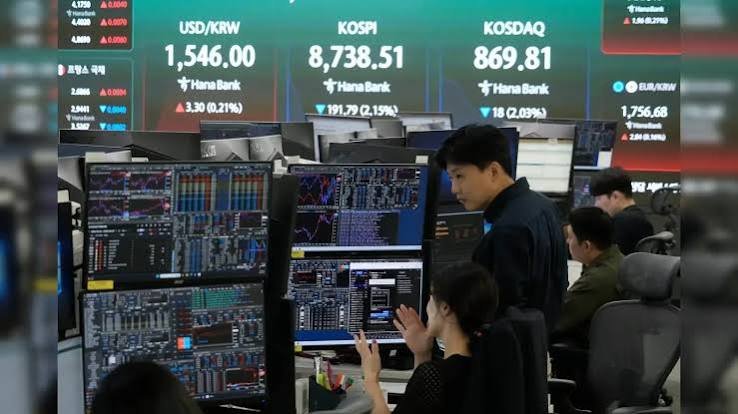
Asian financial markets turned lower on Wednesday as investors became more cautious following record gains on Wall Street, while rising oil prices added another layer of uncertainty to the global economic outlook.
The MSCI Asia-Pacific index excluding Japan fell about 0.5%, with markets in Hong Kong and Singapore among those recording losses. The decline came a day after US stocks climbed to fresh records on expectations that strong corporate earnings, particularly from technology companies, could continue to support the market.
The S&P 500 advanced about 0.6% on Tuesday to another record, while the Nasdaq also reached an all-time high after gaining roughly 0.4%. The Dow Jones Industrial Average rose 0.5%.
However, the positive mood on Wall Street failed to fully carry into Asian trading, as investors weighed higher energy prices, elevated government bond yields and uncertainty over the direction of US interest rates.
Oil Prices Move Above $100
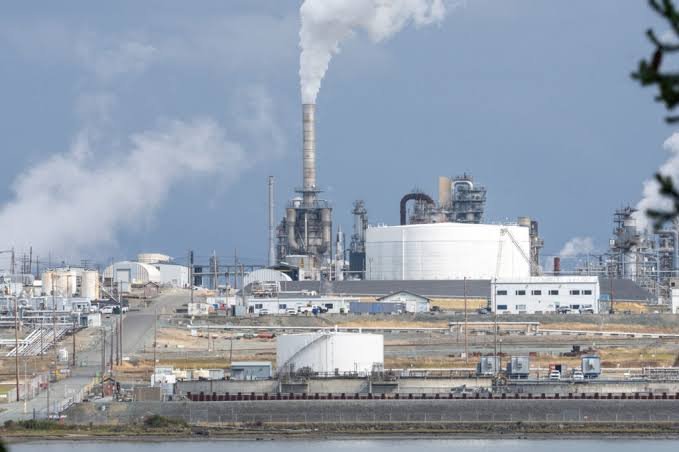
Oil prices were among the biggest market concerns on Wednesday.
US crude rose around 0.9% to about $90.22 per barrel, while Brent crude climbed approximately 1% to $101.58 per barrel.
The increase came as traders assessed two separate risks to energy supplies. A storm was approaching oil-producing areas in the Gulf of Mexico, while attacks by Yemen’s Iran-backed Houthi movement on Saudi Arabia were raising concerns about potential disruption to Middle Eastern energy flows.
The rise in crude prices is particularly important for investors because sustained increases in energy costs could add to inflationary pressure and make it more difficult for central banks to loosen monetary policy.
US Stocks Continue Record Run
Despite the concerns facing the global economy, US equities continued to perform strongly.
The S&P 500 and Nasdaq both established new records, helped by expectations that companies connected to artificial intelligence and other technology trends could report strong earnings.
The rally has provided support for global markets, but investors remain concerned that high valuations could leave stocks vulnerable if economic conditions deteriorate or interest rates remain elevated for longer than expected.
US stock futures were slightly higher in Asian trading, although the momentum appeared weaker than during the previous session.
Bond Yields Remain a Major Concern
Another major focus for investors is the US government bond market.
The yield on the benchmark 10-year Treasury rose to around 5.307% in Asian trading, ahead of a new 10-year Treasury auction.
Investors are closely watching demand for US government debt after longer-term Treasury yields recently reached their highest level in decades.
Higher yields can increase borrowing costs for governments, companies and consumers. They can also place pressure on stock valuations because investors may become more attracted to relatively safer fixed-income assets.
Market participants are therefore expected to pay close attention to the outcome of the Treasury auction as an indication of whether investors remain comfortable holding large amounts of US government debt.
Federal Reserve Rate Decision in Focus
Attention is also turning to the US Federal Reserve.
The central bank is due to release minutes from its September policy meeting, giving investors additional clues about how officials view inflation and future interest-rate decisions.
Expectations for another rate increase in October have fallen sharply. Market pricing put the likelihood of an October hike at around 20.5%, down from roughly 51% a week earlier.
Investors will study the minutes and upcoming comments from Federal Reserve officials for signs of whether policymakers believe further tightening will be necessary later in the year.
Asian Markets Under Pressure
Several major Asian markets moved lower.
Japan’s Nikkei declined about 0.8%, while Hong Kong’s Hang Seng Index fell roughly 0.5%. Australian shares were also slightly weaker.
India’s benchmark stock market slipped around 0.5% after the Reserve Bank of India increased its benchmark interest rate by 25 basis points to 5.5%, marking its first rate increase in almost four years.
Mainland Chinese markets remained closed for a public holiday.
The weakness across parts of Asia reflected a more cautious approach from investors after the strong gains recorded in US equities.
Dollar and Gold Show Mixed Moves
Currency markets were relatively subdued.
The US dollar index gained about 0.1% to 102.06 after declining during the previous session. The Japanese yen weakened around 0.2% to 158.41 per dollar, while the British pound slipped about 0.2% to $1.3248.
The euro also weakened, falling approximately 0.3% to $1.1229.
Gold, meanwhile, declined about 0.6% to $4,137.29 an ounce, giving back some of its recent gains.
Investors Weigh Multiple Risks
The latest market movements show how investors are balancing strong corporate earnings expectations against several macroeconomic risks.
Rising oil prices could revive inflation concerns, while elevated Treasury yields could tighten financial conditions. At the same time, geopolitical tensions and uncertainty over monetary policy continue to influence investment decisions.
Wall Street’s record performance has provided an important source of optimism, particularly around artificial intelligence and corporate earnings. However, the weaker Asian session suggests that investors are becoming more selective as they assess whether the rally can continue.
For now, attention remains firmly focused on oil prices, US Treasury demand and the Federal Reserve’s latest assessment of the economy.