Central African countries are facing a growing public health challenge from the illegal trade in medicines, with limited access to affordable and reliable healthcare helping to drive demand for products sold outside regulated channels.
A new report from the United Nations Office on Drugs and Crime (UNODC), the World Health Organization (WHO) and the Economic and Monetary Community of Central Africa (CEMAC) warned that the illicit medicine market poses a serious threat to patients across the region.
The report focuses on the six CEMAC countries — Cameroon, Central African Republic, Chad, Republic of Congo, Equatorial Guinea and Gabon — where infectious diseases including malaria, tuberculosis and HIV continue to place significant pressure on health systems.
According to the findings, shortages, high prices and difficulties accessing legitimate medicines are creating opportunities for criminal networks to supply products through unofficial markets.
More than 250 tonnes of medicines seized
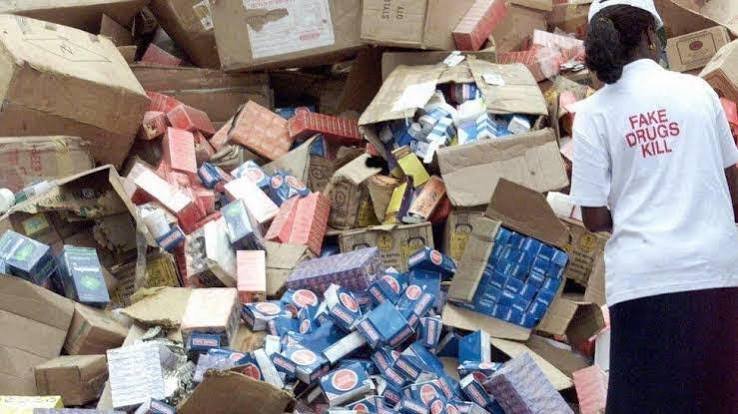
Authorities in the region seized at least 251 tonnes of medical products between 2020 and 2025, according to the report.
The seizures included a wide range of products, from antibiotics and anti-malaria drugs to painkillers, anti-inflammatory medicines and psychoactive substances such as tramadol and pregabalin.
The scale of the seizures highlights the extent of the trafficking problem, although the United Nations cautions that seizure figures can reflect both the volume of illegal trade and the effectiveness of law-enforcement operations.
Cameroon recorded particularly large seizures in 2025, accounting for most of the medical products intercepted that year.
Why illegal medicine markets are growing
The UN report points to weaknesses in healthcare systems as one of the major factors behind the illicit trade.
Many people in Central Africa struggle to obtain medicines through legitimate channels because supplies can be limited, healthcare facilities may be far away and some treatments are simply too expensive.
This situation creates an opening for informal sellers, who can offer individual tablets or smaller quantities at prices that appear more affordable to people with limited incomes.
However, medicines obtained through these channels may be counterfeit, substandard, unapproved or diverted from legitimate supply chains.
The report also found that the illegal market is not limited to fake medicines. Genuine products can be stolen or diverted from regulated distribution networks and then sold illegally.
Patients face serious health risks
The consequences can be severe for patients who unknowingly take poor-quality or falsified medicines.
The UNODC warned that the trade can result in treatment failures, poisoning and preventable deaths. In some cases, illegally traded medicines can even find their way into legitimate healthcare facilities, where patients may assume that the products are safe.
The WHO has previously estimated that falsified or substandard anti-malaria medicines could be associated with between 72,000 and 267,000 deaths annually in sub-Saharan Africa.
Poor-quality antibiotics used to treat childhood pneumonia have also been linked by WHO estimates to potentially 169,271 deaths each year. These figures concern sub-Saharan Africa as a whole rather than Central Africa alone.
Criminal networks use multiple routes
The trafficking networks operate through several transportation channels.
According to the report, illicit medicines enter Central African markets through seaports, river ports and airports, including products concealed in cargo shipments or passengers’ luggage.
Once inside the region, the medicines can be moved along major commercial roads toward inland communities.
This makes the illegal trade difficult to control because traffickers can exploit the same transportation infrastructure used by legitimate businesses and pharmaceutical suppliers.
The UN report also identified a broad range of participants in the illicit market, potentially including manufacturers, wholesalers, informal vendors, couriers, corrupt officials and online sellers.
Armed groups also benefit
The problem extends beyond ordinary criminal networks.
In the Central African Republic, armed groups have reportedly profited from the illegal medicine trade by looting healthcare facilities and imposing charges on shipments moving through areas under their control.
Such activities not only provide funding for armed groups but can also deprive vulnerable communities of medicines and further weaken already fragile health services.
The report also highlighted the growing concern around the illegal distribution of addictive psychoactive medicines.
In one recent case, customs officials in Gabon seized about 17,000 tramadol tablets that authorities linked to cross-border trafficking from neighbouring Cameroon.
Counterfeit medicines remain a major concern
WHO monitoring between 2013 and 2025 recorded hundreds of incidents involving medical products in the CEMAC region.
The UN report noted that the problem includes both falsified and substandard medicines, meaning that not every dangerous product on the illegal market is necessarily completely fake.
Some products may contain the wrong ingredients, insufficient quantities of active ingredients or fail to meet required quality standards.
This makes the problem particularly dangerous because patients may have no reliable way of determining whether a medicine purchased outside an authorised supply chain is genuine.
Stronger controls needed
The UN agencies said tackling the problem requires more than simply increasing seizures.
Governments need to improve the availability and affordability of legitimate medicines while strengthening regulation and monitoring of pharmaceutical supply chains.
Better cooperation between customs authorities, health regulators, law-enforcement agencies and neighbouring countries could also make it harder for traffickers to move products across borders.
For Central Africa, improving access to safe medicines could address one of the conditions that allows the illicit market to flourish.
The latest findings underline the connection between healthcare access, organised crime and public safety. As long as legitimate medicines remain difficult to obtain or unaffordable for many people, illegal sellers are likely to continue finding customers.
The UN therefore considers the trafficking of medical products not only a criminal issue but also a significant public health challenge requiring coordinated action across the region.