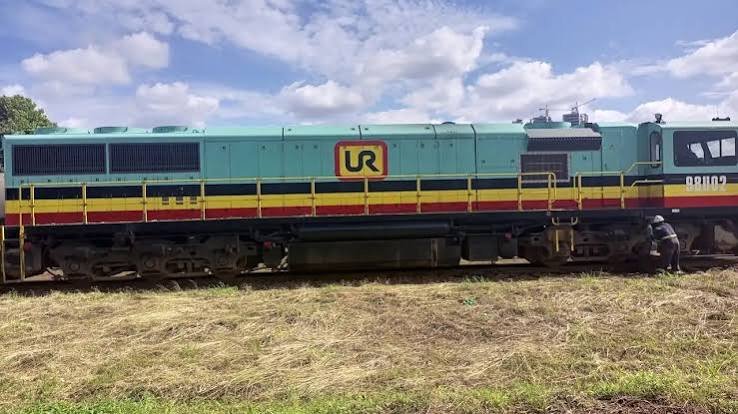
Uganda is aiming to secure full financing for its $2.97 billion Standard Gauge Railway (SGR) project by January 2027, as the government moves to advance one of its biggest infrastructure investments.
The proposed railway is expected to connect the capital, Kampala, to Malaba on the Kenyan border, linking Uganda to Kenya’s rail network and the Port of Mombasa. The connection is designed to improve the movement of goods, reduce transport costs and strengthen trade across East Africa.
Works and Transport Minister Fred Byamukama disclosed the latest financing target while addressing lawmakers on Tuesday, November 17, 2026. He said the government was working to complete the financial arrangements before authorising the contractor to begin major construction activities.
The project is valued at €2.70 billion, equivalent to approximately $2.97 billion. Although the contract was signed in 2024 and the project officially launched that year, full construction has been held back by the difficulty of securing the entire financing package.
Turkish Contractor Awaits Full Construction Approval
Uganda awarded the railway construction contract to Turkish company Yapi Merkezi in October 2024. The agreement covers a 272-kilometre railway line connecting Malaba with Kampala.
The contractor is expected to complete the main construction programme within four years after receiving the formal approval to proceed with major works.
However, the project has remained in its preparatory phase while the government negotiates with international lenders and other financing partners.
Citibank has been appointed to help mobilise funding for the project, while Uganda continues discussions with export credit agencies and development finance institutions.
Byamukama said the government expects to give the contractor the green light for full construction after the financing arrangements are concluded.
The delay means that the four-year construction period has not yet formally started, despite the project’s launch in November 2024.
Islamic Development Bank Approves Major Financing
One of the major developments in Uganda’s efforts to secure the required funds is the approval of €650.75 million by the Islamic Development Bank (IsDB).
The financing, approved in June 2026, is intended to support important components of the railway infrastructure, including the construction of the Jinja Nile Bridge, a tunnel connecting Mbuya and Kampala, six railway stations and three workshops.
The government is also seeking additional support from other development lenders. The OPEC Fund for International Development has been considering a proposed €150 million loan, while negotiations with export credit agencies are continuing.
The financing structure is expected to draw on several sources, including export credit agencies, development finance institutions and Uganda’s own contribution.
Citibank is assisting with the mobilisation of funds, as the government works to bring the different financing commitments together.
The outstanding arrangements are important because approval of individual loans does not automatically mean the entire project has reached financial close. The government must still satisfy lenders’ conditions and complete the necessary agreements before the full construction programme can proceed.
Preparatory Works Have Already Been Undertaken
Although major construction is awaiting full financing, some preliminary activities have taken place along the railway corridor.
The Ugandan government provided €75 million under a Limited Notice to Proceed arrangement to allow Yapi Merkezi to undertake early-stage work.
These activities included engineering surveys, geotechnical investigations and the establishment of facilities needed to support the construction programme.
The contractor has also worked on a construction camp, a concrete batching plant, a sleeper factory and a materials laboratory in Iganga.
The preparatory investment is intended to reduce technical uncertainty and ensure that essential construction facilities are available once the full project receives approval.
However, these activities do not represent the start of the main four-year construction period. That timeline is expected to begin only after the government achieves financial close and issues the full notice to proceed.
Uganda Plans to Extend Railway Network Across the Region
Beyond the Kampala-Malaba section, Uganda is considering a much wider expansion of its railway network to improve connections with neighbouring countries.
Byamukama said the government was working on plans to extend the railway by an additional 1,425 kilometres towards the country’s northern and western regions.
The proposed routes are intended to improve links with South Sudan, the Democratic Republic of Congo and Rwanda.
Such connections could give landlocked Uganda more options for moving cargo across East and Central Africa while supporting regional trade and economic integration.
The initial Malaba-Kampala railway remains the immediate priority because it would connect directly with Kenya’s existing Standard Gauge Railway network.
That connection is particularly important for Uganda’s imports and exports, many of which move through the Port of Mombasa before being transported inland by road.
A functioning railway corridor could provide an alternative for long-distance freight movement and reduce the pressure on major roads.
Project Expected to Strengthen East African Trade
The railway is expected to play an important role in Uganda’s long-term transport and economic development plans.
As a landlocked country, Uganda relies heavily on regional transport corridors to move goods to and from international markets. Its access to the Port of Mombasa through Kenya makes the Northern Corridor particularly important for its import and export activities.
A modern railway connection could improve cargo movement, support businesses and reduce dependence on road transport for long-distance deliveries.
The project could also create employment opportunities during construction and support economic activities around railway stations and logistics facilities.
However, the expected benefits will depend on the government’s ability to secure the outstanding financing, complete land acquisition and resolve other requirements before full construction begins.
Uganda’s January 2027 target is therefore an important milestone for the project. If achieved, it could finally move the Malaba-Kampala railway from preliminary preparations into its main construction phase.
For now, the government faces the task of bringing together its financing partners and completing the conditions needed to deliver the long-delayed infrastructure project.