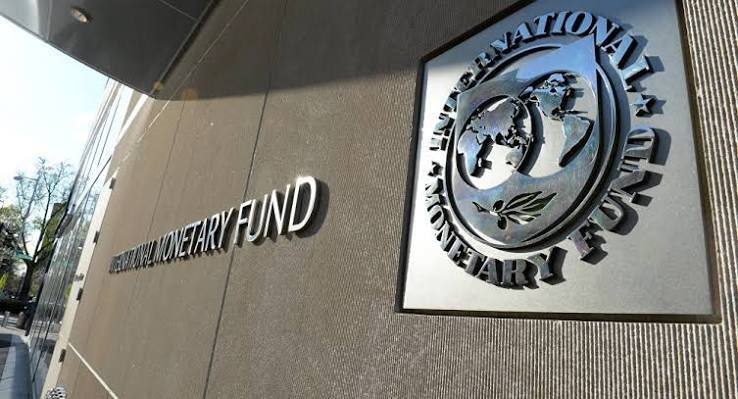
The International Monetary Fund (IMF) has approved a $425 million economic and financial programme for Guinea aimed at supporting economic reforms, strengthening public financial management and improving the country’s financial stability over the next three years.
The approval, announced on Monday, November 23, 2026, by the Guinean government, marks a significant step in the country’s efforts to improve economic management and mobilise resources for development priorities.
The programme is supported by the IMF’s Extended Credit Facility (ECF) and Extended Fund Facility (EFF), providing a framework for the West African nation to pursue reforms designed to improve its fiscal and monetary position.
The approval follows an earlier agreement reached between the IMF and Guinean authorities in August, when the proposed financing package was valued at approximately $439 million. The amount approved by the IMF’s executive board is now reported at $425 million.
Guinea’s Prime Minister, Amadou Oury Bah, welcomed the approval, describing the agreement as an important development for the country’s economic ambitions.
He said the IMF’s involvement would provide more than financial assistance, arguing that its technical expertise, oversight and institutional support could help the government improve economic management and strengthen the country’s prospects.
The programme comes at a time when Guinea is seeking to expand its economy through mineral development, infrastructure investment and its long-term national development strategy.
Why the IMF approved the $425 million programme
The financial arrangement is intended to help Guinea strengthen its economic foundations while addressing challenges involving public spending, revenue generation, monetary policy and financial management.
Under the programme, the government is expected to pursue reforms that improve the collection of domestic revenue, strengthen budgetary discipline and enhance transparency in the management of public resources.
The IMF-backed arrangement is also expected to support efforts to improve the country’s fiscal and monetary frameworks, helping authorities manage economic pressures while creating room for investment in development projects.
Guinea’s economy has considerable natural-resource potential, particularly in the mining sector. However, the country has faced challenges in translating its mineral wealth into broader economic benefits, including improvements in public services, infrastructure and living standards.
The new programme is expected to provide a framework for the government to improve how public funds are collected, managed and allocated, while strengthening the credibility of its economic policies.
The financing is also expected to help Guinea engage with other development partners and potentially improve access to additional funding for national development priorities.
The Guinean finance ministry said the programme would support the government’s efforts to improve budget preparation and execution, treasury management, debt administration, spending quality and accountability.
These reforms are expected to play a central role in determining whether the financing arrangement can contribute to more sustainable economic growth over the coming years.
Guinea seeks to turn mineral wealth into economic growth
Guinea’s economic ambitions are closely linked to its vast mineral resources, particularly its iron ore and bauxite deposits.
The country is seeking to expand mining activity and improve the infrastructure needed to transport and export mineral products. Among the most significant projects supporting these ambitions is the Simandou iron ore development, which is expected to play an increasingly important role in the country’s economic outlook.
Simandou is regarded as one of the world’s major undeveloped iron ore deposits, and its development is expected to generate investment, employment opportunities, export revenues and potential government income.
Guinea’s authorities have also introduced a longer-term development vision known as Simandou 2040, which seeks to use the country’s mineral resources and infrastructure development to support broader economic transformation.
The IMF programme is expected to complement these ambitions by supporting stronger public financial management and helping the government establish a more effective framework for handling additional revenue as mining activity expands.
However, the economic benefits of mineral development will depend on how effectively the government manages revenue, invests in infrastructure, supports social services and ensures that the proceeds from resource exploitation contribute to the wider population.
The programme therefore comes at a critical period for Guinea, as the government seeks to balance large-scale investment opportunities with the need for stronger institutions and sustainable economic management.
IMF programme expected to strengthen public financial management
One of the major objectives of the agreement is to improve Guinea’s management of public finances and strengthen transparency across government institutions.
The programme is expected to support reforms involving budget planning, revenue collection, expenditure management and debt administration.
The IMF and Guinean authorities are also expected to work on measures aimed at improving the country’s financial and monetary frameworks, which are important for maintaining economic stability.
For Guinea, better public financial management could help ensure that revenue from mining, taxes and other sources is more effectively directed towards priority sectors.
The government is expected to face the challenge of implementing the reforms while addressing the needs of households, businesses and public institutions.
The IMF’s involvement is also expected to provide technical support and oversight as the authorities work towards meeting the programme’s objectives.
The success of the arrangement will depend largely on the government’s ability to implement the agreed reforms, maintain fiscal discipline and ensure that public resources are managed transparently.
Guinea’s economic outlook and challenges
Despite its abundant natural resources, Guinea continues to face economic and development challenges that require sustained policy efforts.
The country needs investment in infrastructure, education, healthcare, electricity, transportation and other essential services to improve living conditions and support long-term economic development.
The expansion of mining activity offers opportunities for growth, but economic progress will also depend on the government’s ability to manage revenue effectively, control spending pressures and encourage investment beyond the extractive sector.
The IMF programme is expected to provide additional support for these efforts over the next three years, while offering a framework for monitoring economic reforms.
Guinea’s authorities will also need to navigate potential risks associated with commodity prices, financing conditions and the implementation of large-scale development projects.
The agreement is therefore not simply a financing arrangement but also a reform framework intended to strengthen the country’s economic institutions and improve the management of public resources.
What the $425 million IMF deal means for Guinea
The approval of the $425 million programme represents an important development for Guinea’s economic policy and its efforts to secure additional support for national development.
The arrangement could help strengthen the government’s financial position, improve public-sector management and support reforms aimed at creating a more stable economic environment.
It also comes as Guinea seeks to accelerate development through mining projects, infrastructure investment and its Simandou 2040 vision.
However, the long-term impact of the agreement will depend on how effectively the government implements the reforms, manages available resources and translates economic growth into tangible benefits for citizens.
With the IMF’s approval now secured, Guinea’s authorities will be expected to focus on delivering the programme’s objectives and ensuring that the country’s natural-resource wealth contributes to sustainable development.