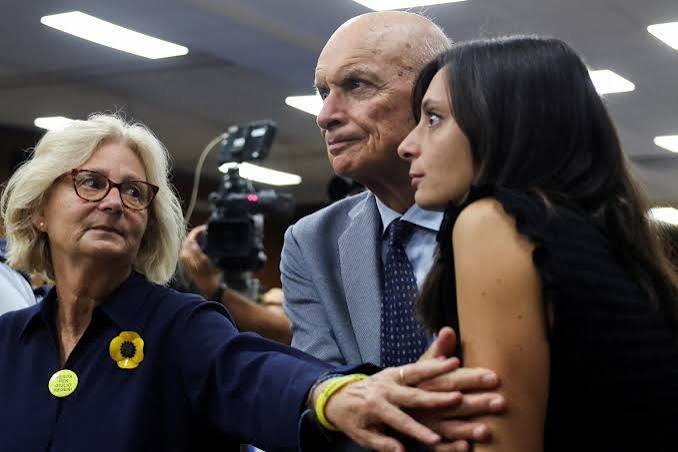
An Italian court in Rome has convicted three Egyptian security officials over the 2016 abduction of Italian researcher Giulio Regeni, handing each of them a 10-year prison sentence. A fourth defendant was acquitted.
The verdict, delivered on Monday, September 28, 2026, comes more than a decade after Regeni disappeared in Cairo and was later found dead with extensive signs of torture. The case has remained a major source of tension between Italy and Egypt.
The three convicted men were identified as Major Magdi Ibrahim Abdelal Sharif, Colonel Hisham Helmy and Colonel Ather Kamal. The Rome court found them guilty of the aggravated kidnapping of Regeni. However, the court did not convict them of murder.
Major General Tarek Sabir, the fourth Egyptian security official standing trial, was cleared of the kidnapping charge. The court also rejected the allegation of conspiracy to commit aggravated murder against Sharif.
Regeni Disappeared in Cairo in 2016
Regeni was a 28-year-old postgraduate researcher at the University of Cambridge in Britain when he disappeared in Cairo on January 25, 2016.
He had been conducting academic research involving independent trade unions in Egypt, an area considered politically sensitive at the time.
His body was discovered several days later. Italian investigations concluded that he had suffered severe torture before his death, with the condition of his remains becoming a central part of the case against the Egyptian officials.
The circumstances surrounding his disappearance and death have generated competing explanations.
Egyptian authorities have denied that state agencies were responsible and previously attributed the killing to criminals. Italian prosecutors, however, pursued a case alleging that Egyptian security personnel were involved in Regeni’s abduction.
Trial Held Without Defendants
The proceedings in Rome were conducted in absentia because the accused Egyptian officials did not appear before the Italian court.
Italian law allows certain cases involving crimes committed abroad against Italian citizens to proceed under such circumstances. However, the absence of the defendants also means that enforcing the sentences could prove difficult.
Italian authorities have said they do not know the current whereabouts of the three convicted men. Their extradition to Italy is considered unlikely, meaning the sentences may remain difficult to enforce in practice.
Prosecutors had requested tougher punishments than those eventually imposed. They had sought a life sentence for Sharif and prison terms of 17 years and six months for the other defendants. The court ultimately imposed 10-year sentences on each of the three convicted officials.
Italy-Egypt Relations Affected by the Case
The Regeni investigation has had a significant impact on relations between Rome and Cairo.
Cooperation between prosecutors from the two countries initially took place, but disagreements over the investigation later emerged. Italian officials have repeatedly criticized what they described as inadequate cooperation from Egyptian authorities.
Rome Chief Prosecutor Francesco Lo Voi said after Monday’s ruling that the case had reached its outcome despite what he characterized as limited cooperation from Egypt.
Egypt has consistently rejected allegations of official involvement in Regeni’s death. The defendants themselves have not publicly responded to the accusations.
The case has also remained important to Regeni’s family, who have spent years seeking accountability for his death.
A Decade-Long Search for Justice
Monday’s ruling represents a significant legal development in a case that has remained unresolved for roughly ten years.
Although three officials were convicted, the court’s decision focused on the kidnapping charge rather than establishing criminal responsibility for Regeni’s murder. The acquittal of Sabir also means that one of the four defendants has been cleared of involvement under the charges considered by the court.
For Regeni’s family and Italian investigators, the verdict marks another major stage in the effort to establish what happened to the researcher during his final days in Cairo.
The broader diplomatic consequences of the case are likely to continue, particularly because the convicted officials remain outside Italy and the practical enforcement of their sentences remains uncertain.