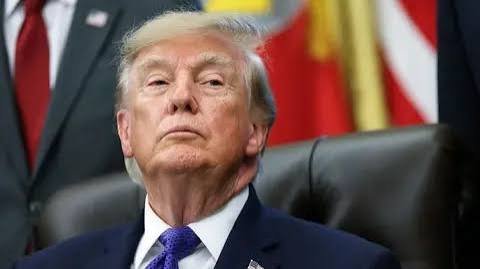
US President Donald Trump has renewed his promise to provide a $5,000 payment to adult American citizens if Republicans maintain control of both chambers of Congress following the November 2026 midterm elections.
Trump repeated the proposal in a video shared on social media, presenting the proposed payment as a reward for voters if Republicans retain control of the House of Representatives and Senate.
The president has described the proposed payment as a “Trump dividend”, arguing that strong economic performance and revenue generated through tariffs would provide the resources needed for the programme. However, the plan has yet to receive congressional approval and several questions remain unanswered about its funding, eligibility and implementation.
Trump links payment to Republican victory
Trump has made the proposed $5,000 payment part of his broader political message ahead of the midterm elections.
In his latest remarks, he contrasted a Republican victory with what he predicted would happen if Democrats gained control of Congress. Trump warned that a Democratic victory would damage the US economy, while claiming that continued Republican leadership would allow Americans to receive the proposed payment.
The president first unveiled the idea in September at a Republican midterm convention in Dallas. At the time, he suggested that the payment would be available to adult US citizens and would have to be spent within the United States. However, he did not provide a detailed mechanism for enforcing that condition.
Funding remains a major question
One of the biggest issues surrounding the proposal is how the government would finance such a large payment.
Trump has suggested that tariff revenue and what he describes as strong economic performance could make the plan possible. He has estimated the overall cost at roughly $1 trillion.
Independent estimates, however, indicate that the bill could be considerably higher depending on the number of people ultimately eligible. The US has more than 240 million adult citizens, meaning a $5,000 payment to every eligible person could exceed $1.2 trillion.
Trump has also cited billions of dollars in tariff collections and claimed that trillions of dollars in investment have entered the US economy as evidence that his administration could afford the programme.
Economists and tax-policy analysts have questioned whether tariff revenue could realistically support a payment of this scale without increasing pressure on government finances.
Congress would have to approve the money
Another obstacle is the legal requirement for congressional approval.
Under the US Constitution, federal spending must generally be authorised by Congress. Legal experts have therefore questioned whether the president could distribute $5,000 payments without lawmakers passing legislation to establish and fund the programme.
Trump has suggested that congressional approval may not be necessary, although he has not provided a detailed legal explanation for that position. Experts cited by US media have argued that the president does not have independent authority to spend Treasury funds on a nationwide payment programme without an appropriation from Congress.
Republican lawmakers have also not uniformly embraced the proposal, particularly because of concerns over the potential impact on the federal deficit.
Proposal follows earlier payment promises
The $5,000 plan is not the first time Trump has floated the idea of sending money directly to Americans.
Earlier proposals included a so-called DOGE dividend, which was discussed in connection with expected government savings. Trump later promoted possible payments funded by tariff revenue and subsequently talked about directing healthcare-related savings to Americans.
Some of those plans have not materialised.
Trump has pointed to the $1,776 payments made to US service members as an example of his administration delivering on a financial promise. The payments were ultimately characterised by the IRS as supplemental housing allowances for eligible military personnel rather than a universal payment to Americans.
The administration has also moved ahead with other targeted payments, including $500 rebates for some people connected to Affordable Care Act coverage and a recently announced $90 payment for millions of Medicare beneficiaries. Those programmes are separate from the proposed $5,000 dividend.
Skepticism grows ahead of midterms
The renewed pledge comes as Trump and Republican candidates prepare for a closely watched midterm election.
Trump has increasingly placed economic issues at the centre of his campaign, particularly as voters continue to express concerns about inflation, household expenses and the broader cost of living.
Critics have questioned whether the $5,000 promise is financially realistic and have characterised it as an election-year proposal designed to appeal directly to voters.
Republican candidates in competitive races have also been relatively cautious about making the payment proposal a central part of their own campaigns.
For now, the proposed “Trump dividend” remains a political pledge rather than an approved federal programme. Its implementation would depend on the outcome of the November elections, congressional action and the administration’s ability to establish a legally and financially viable funding mechanism.
As the midterm campaign intensifies, the $5,000 promise is likely to remain one of Trump’s most closely watched economic proposals, particularly among voters interested in whether the president can turn the pledge into an actual payment.