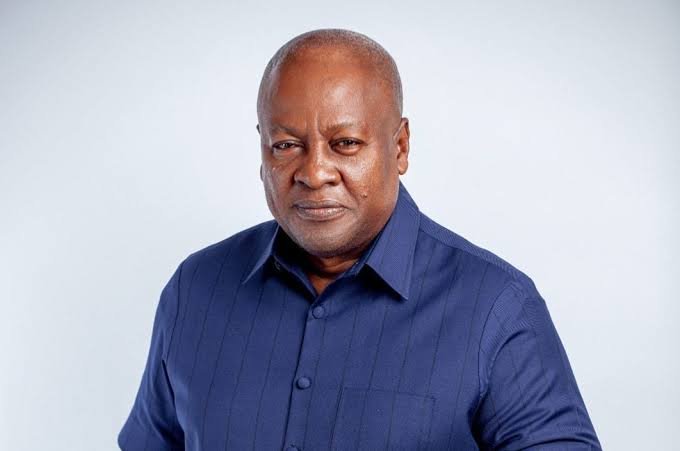
Ghanaian President John Dramani Mahama has explained why his government turned down a proposed health agreement from the United States, saying some of the conditions attached to the deal raised serious concerns over national sovereignty, health data and regulatory authority.
Mahama made the remarks during an engagement at the Council on Foreign Relations (CFR) in New York, where he discussed Ghana’s decision to reject the proposed US health compact and the government’s broader plans to strengthen domestic health systems.
According to the president, Ghana did not dismiss the proposal without scrutiny. The document was reviewed by the Ministry of Health before being presented to Cabinet, where officials identified several provisions they considered problematic.
One of the issues highlighted by Mahama was a requirement concerning Ghana’s pathogen information. He also said the proposed agreement sought access to medical records.
The president questioned the basis for such requirements, particularly the transfer of sensitive health information to another country.
He further pointed to provisions requiring Ghana to contribute a specified amount of funding to the programme. Another major concern, according to Mahama, was a clause relating to the inspection of medicines and other medical products entering Ghana under the arrangement.
He said the proposed terms would have prevented Ghana’s Food and Drugs Authority (FDA) from carrying out its normal inspection role on products supplied through the programme.
Mahama described the conditions as unacceptable and said Cabinet rejected the proposal quickly after reviewing it. He added that the Health Minister was subsequently instructed to communicate Ghana’s position to the US ambassador.
The decision comes against the background of changes in US foreign assistance and the withdrawal of funding that Ghana had previously expected to receive.
Mahama said about $174 million that had been included in Ghana’s national budget was withdrawn, creating funding pressures in sectors including health and education. He estimated that the health sector alone faced an annual gap of about $74 million.
The funding shortfall has affected areas such as medical research, HIV testing laboratories and programmes connected to the US President’s Emergency Plan for AIDS Relief (PEPFAR), including the supply of antiretroviral medicines.
The situation, Mahama said, contributed to the development of Ghana’s Accra Reset initiative, which places greater emphasis on reducing dependence on external assistance and expanding the country’s ability to meet its own healthcare needs.
A major part of that strategy is increasing local production of medicines and vaccines.
Mahama linked the policy to lessons from the COVID-19 pandemic, when African countries faced difficulties securing vaccines while much of the world’s manufacturing capacity was concentrated outside the continent.
He argued that Africa needs to develop stronger pharmaceutical and vaccine manufacturing capabilities so that countries can respond more effectively during future health emergencies.
The president’s position also reflects his wider argument that African countries should strengthen their economic and institutional capacity while continuing to engage international partners.
In August, Mahama similarly argued that Africa should move away from excessive dependence on external assistance and increase local value creation in areas such as agriculture, minerals and healthcare. He said partnerships should continue but should be based on mutual interests and greater African participation in decision-making.
Ghana’s rejection of the US health compact is not an isolated development. Other African countries have also raised concerns during negotiations over proposed US health agreements, particularly around data governance. Graphic Online reported that Zimbabwe had expressed similar reservations, while implementation of a related agreement in Kenya faced a temporary legal suspension.
For Ghana, the immediate challenge is how to address the funding gap created by reduced external support while maintaining essential healthcare services.
Mahama’s administration has therefore placed greater emphasis on domestic financing, local pharmaceutical production and building systems that can withstand changes in international aid.
The president’s comments suggest that Ghana’s approach is not to end cooperation with the United States or other international partners, but to negotiate health and development partnerships within what his government considers acceptable national and regulatory boundaries.
The debate over the health compact therefore extends beyond the financial value of the proposed assistance. It also raises broader questions about the management of medical information, regulatory independence, national financing commitments and the balance between international health cooperation and national sovereignty.
For the Mahama administration, strengthening Ghana’s capacity to finance and manage its healthcare system remains a central part of its wider push for greater national and African health sovereignty.