Nigeria and the European Union are stepping up discussions on migration, with both sides working towards a broader framework that could expand lawful opportunities for Nigerians seeking to study, work and build careers in Europe.
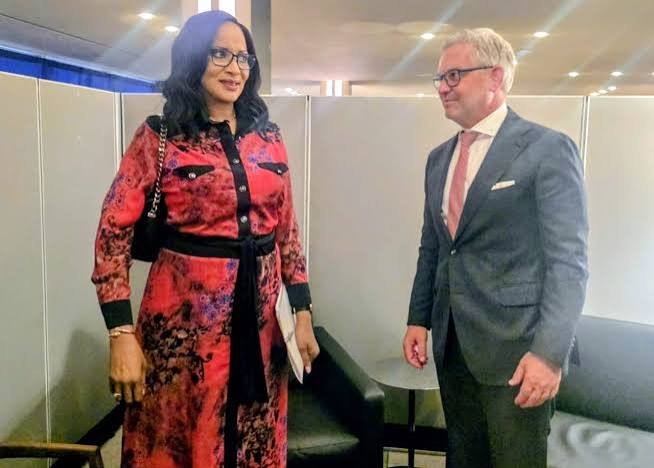
The latest discussions took place in New York on the sidelines of the 81st United Nations General Assembly, where Nigeria’s Minister of Foreign Affairs, Ambassador Bianca Odumegwu-Ojukwu, met with the EU Commissioner for Internal Affairs and Migration, Magnus Brunner.
A major issue on the table was the long-delayed EU-Nigeria Readmission Agreement, which has been under negotiation since 2016. Both sides see the completion of the agreement as an important part of deeper cooperation on migration.
Legal migration opportunities under consideration
Nigeria used the meeting to stress the importance of creating structured and lawful routes for Nigerians who want to pursue opportunities abroad.
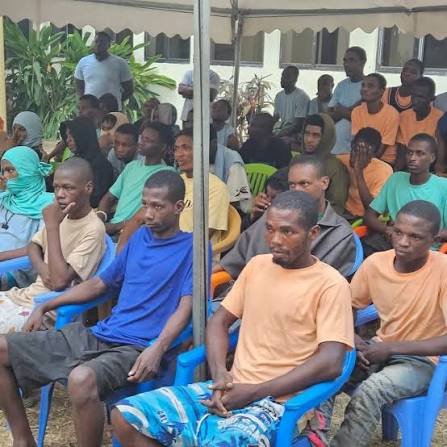
Odumegwu-Ojukwu also called for migration cooperation to include support for Nigerians who return to the country, as well as assistance for infrastructure and development.
The Nigerian government wants any new arrangement to take into account the country’s large and youthful population while ensuring that migration policies do not undermine Nigeria’s economic and development priorities.
For the EU, expanding legal mobility is also being considered as part of a broader approach to managing irregular migration.
Brunner said talent partnerships could provide opportunities for Nigerian professionals while helping European countries address some of their labour and skills requirements.
Readmission agreement remains central
The EU-Nigeria Readmission Agreement has been discussed for years but has yet to be concluded.
Brunner reiterated the importance of reaching an agreement, saying its completion could provide a foundation for wider cooperation between Nigeria and the EU on migration-related issues.
The matter was also discussed during the eighth Nigeria-EU Ministerial Dialogue held in March 2026, showing that migration remains an important component of the wider relationship between Abuja and Brussels.
A readmission arrangement generally provides a framework for the return of people who do not have the legal right to remain in a destination country. For Nigeria, officials have stressed that return arrangements should be accompanied by meaningful reintegration support.
Proposed migration and security framework
The discussions are expected to feed into a broader proposed Migration and Security Cooperation framework.
According to the Nigerian government, the framework could cover several areas, including legal mobility, talent partnerships, reintegration of returning migrants and improved border management.
It could also involve greater cooperation with the European Border and Coast Guard Agency, known as Frontex.
Nigeria and the EU are additionally considering stronger cooperation against human trafficking, migrant smuggling and other forms of transnational organised crime.
An information-sharing arrangement involving Europol has also been discussed as a possible way of strengthening Nigeria’s ability to investigate and combat international criminal networks.
EU already supports migration programmes in Nigeria
The latest negotiations build on existing EU migration programmes in Nigeria.
In March 2026, the European Union announced an additional €16 million for initiatives supporting the reintegration of returning migrants and efforts to combat human trafficking and migrant smuggling.
The funding forms part of the EU’s wider partnership with Nigeria, which includes programmes covering economic development, digitalisation, health, agriculture, security and migration.
The EU has also said its migration partnership with Nigeria is intended to support sustainable reintegration and improve migration management while protecting vulnerable people.
Abuja meeting expected in November
The latest New York discussions are expected to continue in the coming months.
Brunner indicated an interest in visiting Abuja in November 2026 for further talks with the Nigerian government, although the precise date is yet to be agreed.
The proposed meeting could provide an opportunity for both sides to examine outstanding issues surrounding the readmission agreement and develop the wider migration and security framework.
For Nigeria, the discussions represent an attempt to balance concerns over irregular migration and the return of migrants with the need to create legitimate opportunities for its citizens abroad.
For the EU, closer cooperation with Nigeria could strengthen efforts against migrant smuggling and organised crime while creating more structured channels for legal mobility.
The outcome of the ongoing negotiations will determine how far the two sides can translate these proposals into practical arrangements for Nigerian migrants, returnees and professionals seeking lawful opportunities in Europe.