President Bola Tinubu has received the constitutional amendment bill seeking to establish state police in Nigeria after all 36 State Houses of Assembly approved the proposed legislation.
The development brings the long-running effort to decentralise Nigeria’s policing system closer to its final constitutional stage, with the bill now awaiting presidential consideration and assent.
The President’s Chief of Staff, Femi Gbajabiamila, confirmed the development in a statement on Wednesday, November 18, 2026. He disclosed that the document was formally presented to Tinubu by his Special Advisers on Senate and House of Representatives Matters, Basheer Lado and Wasiu Olanrewaju-Smart.
According to Gbajabiamila, Tinubu will review the proposed constitutional amendment in consultation with the Attorney-General of the Federation and Minister of Justice, Lateef Fagbemi, before signing it at a formal ceremony.
The approval by all 36 state legislatures exceeds the constitutional requirement of at least 24 state assemblies for an amendment of this nature.
All 36 States Endorse State Police Proposal
The approval from every state assembly represents a major development in the legislative process to introduce state-controlled policing in Nigeria.
Under Section 9(2) of the 1999 Constitution, a proposed constitutional amendment must receive approval from at least two-thirds of the 36 State Houses of Assembly. This means the proposal required support from a minimum of 24 states to satisfy the constitutional threshold.
However, all 36 assemblies eventually endorsed the proposed amendment, giving it unanimous support at the state legislative level.
The Clerk to the National Assembly, Kamoru Ogunlana, announced the outcome on November 16, describing the development as 100 per cent approval from the state legislatures.
The National Assembly subsequently moved to transmit the bill to the President after confirming that the necessary constitutional requirements had been met.
The Senate also adopted a motion sponsored by its leader, Opeyemi Bamidele, directing the Clerk to the National Assembly to forward the amendment to Tinubu for assent.
Senate and House Had Earlier Passed the Bill
The proposal had already secured approval from both chambers of the National Assembly before being sent to the state legislatures.
The Senate passed the constitutional amendment on June 24, 2026, while the House of Representatives approved it on July 23.
Following the votes in the federal legislature, the bill was forwarded to the 36 state assemblies for consideration in accordance with the constitutional amendment procedure.
The successful endorsement by the states completed a major part of the legislative process, paving the way for the document to reach the presidency.
The proposed amendment, known as the Constitution of the Federal Republic of Nigeria (Sixth Alteration) Bill, 2026, seeks to provide constitutional backing for the creation of State Police Services alongside the existing federal policing structure.
However, the President’s receipt of the bill does not mean that state police operations have already begun. Presidential assent and the necessary implementing laws and arrangements remain important steps in establishing the system.
National Policing Bill Still Required
While the constitutional amendment has advanced, the Federal Government is also working on a separate piece of legislation intended to establish the operational framework for state police.
Gbajabiamila, who chairs the Presidential Working Group on State Police, said the group had completed nationwide consultations and engagements with relevant stakeholders to prepare a draft National Policing Bill.
He disclosed that the proposed legislation had been submitted to the Federal Ministry of Justice for legislative drafting validation.
After the ministry completes its review, the working group is expected to examine the validated document before presenting it, together with its report, to the President.
The Senate has also urged the executive arm to forward the National Policing Bill to the National Assembly for consideration and passage.
The additional legislation is important because constitutional approval alone will not settle all the practical questions surrounding the proposed system. Rules will be needed to guide the establishment, administration and operation of state police services, including their relationship with the existing federal force.
The proposed framework is also expected to address issues such as policing standards, accountability and coordination between federal and state authorities.
State Police Proposal Aims to Address Nigeria’s Security Challenges
The renewed push for state police has been driven largely by concerns over Nigeria’s persistent security problems, including banditry, kidnapping, insurgency and communal violence.
Supporters of decentralised policing argue that state governments and local security agencies could be better positioned to understand the particular challenges affecting their communities.
They believe locally established police services could improve intelligence gathering, strengthen security coverage in rural areas and help authorities respond more quickly to threats.
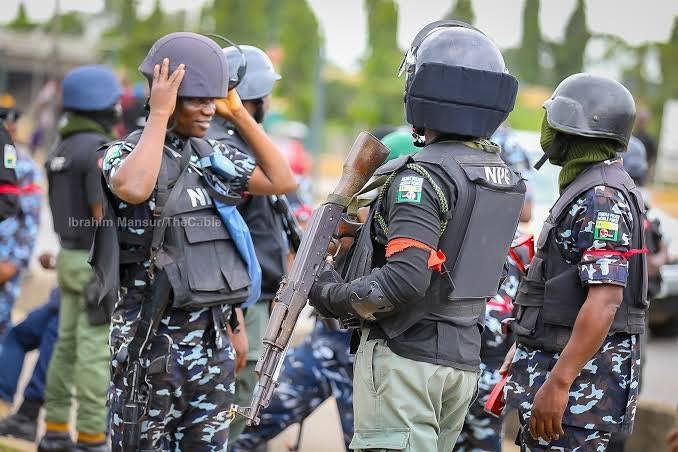
Nigeria currently operates a centralised policing structure through the Nigeria Police Force, which is under federal control. Although governors are commonly described as their states’ chief security officers, they do not exercise direct operational command over police commissioners and personnel.
The proposed constitutional change would create a legal pathway for states to establish their own police services while retaining a federal policing structure.
However, the plan has also generated concerns about the possibility of political interference, inadequate funding and the misuse of police powers by state authorities.
Critics have particularly emphasised the need for safeguards to prevent state police formations from being used against political opponents or individuals critical of government officials.
Attention Turns to Tinubu’s Assent
With all 36 state assemblies having approved the proposed amendment and the bill now before the President, attention has shifted to the next steps at the federal level.
Gbajabiamila said Tinubu would consult the Attorney-General before proceeding with a formal signing ceremony.
The Presidential Working Group’s separate work on the National Policing Bill will also be important in determining how the proposed arrangement can operate in practice.
Although the latest development represents significant progress for supporters of state policing, Nigerians will still be watching how the government addresses concerns about accountability, funding, operational independence and coordination between different levels of law enforcement.
For now, the proposed constitutional amendment has cleared the state assembly approval stage, but the implementation of state police will depend on the remaining legal and administrative processes.