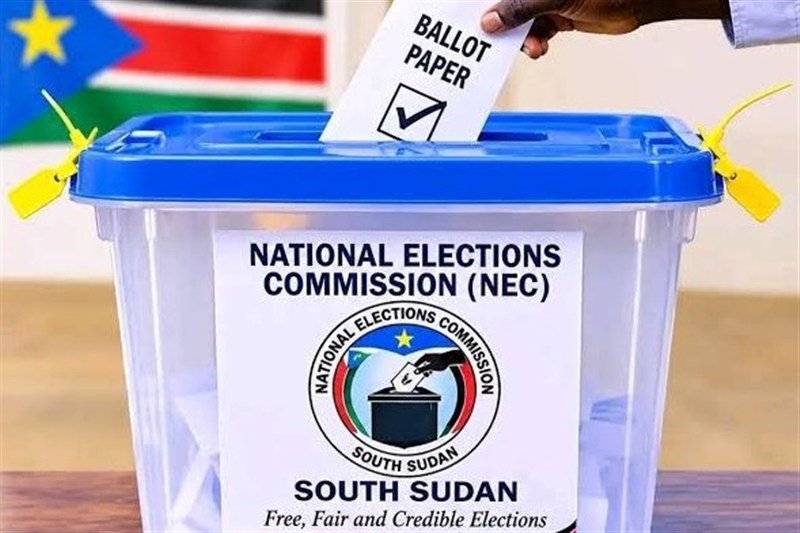
South Sudan’s National Elections Commission has moved the country’s long-delayed general election from December 22, 2026, to February 11, 2027, according to a revised electoral calendar reported by Reuters and local media. The change shifts polling by 51 days and adds another delay to a vote that has been postponed repeatedly since the country gained independence in 2011.
The commission’s updated schedule also resets several steps leading to polling. Voter registration is set to run from November 14 through November 28, followed by publication and review of a provisional voters’ register. The final register is scheduled for January 9. Candidate nomination activities are due to continue through December and January, with the final list of candidates expected on January 18.
The campaign period is scheduled to begin on December 27 and end on February 9. February 10 is designated as a campaign-free day before voting on February 11. The calendar sets February 15 for the declaration of final results and February 16 for their publication. It also allows 148 days for election-related disputes, running from February 17 to July 15, 2027.
The new polling date comes close to the end of South Sudan’s extended transitional period, which is due to expire on February 22, 2027. The current transition and election timetable were established under the 2018 peace agreement and subsequent extensions. The February date therefore leaves little time between voting and the scheduled end of the transition, while the extended period for resolving electoral disputes would continue well beyond it.
The revised date has also raised questions about the legal timetable. South Sudanese law, as described by Radio Tamazuj, provides for elections in December 2026. Moving the vote into February may therefore prompt debate over whether the new calendar is consistent with the statutory framework and whether additional legal steps are needed. That is a question about the schedule’s legal basis, not a court ruling that the calendar is invalid.
South Sudan has yet to hold a general election as an independent state. The country’s political transition has been extended several times as leaders and election bodies faced delays in implementing provisions of the peace deal, preparing electoral institutions and resolving political disagreements. The 2018 agreement ended a five-year civil war and established a power-sharing arrangement involving President Salva Kiir and rival leader Riek Machar.
The election preparations are unfolding amid continuing insecurity and political strain. In September, Kiir dissolved the transitional government and appointed a caretaker administration ahead of the previously scheduled December vote. Machar remains under house arrest and is facing trial on charges that include treason; his allies deny the allegations. The status of the opposition leadership and its participation in the electoral process remain important questions for the vote’s credibility.
United Nations officials had already warned that South Sudan faced significant hurdles in preparing for the December election, including security and logistical concerns and a compressed timetable. The UN mission also pointed to outstanding milestones in the peace agreement and uncertainty about how the post-election period would be managed. Its November 10 statement stressed that the challenge was not simply whether voting could take place on a particular date, but whether the remaining transition could preserve peace and build public confidence.
The AU’s envoy for South Sudan, former Tanzanian president Jakaya Kikwete, also urged international support to help the vote take place peacefully. He warned that a poorly managed election could worsen the country’s political and security crisis. The country continues to face armed clashes and displacement, while millions of people need humanitarian assistance. These conditions make security, political participation and public trust central to the election process, beyond the mechanics of registering voters and counting ballots.
The commission’s calendar provides more time for registration, candidate nominations and campaigning than the previous schedule allowed. It does not, by itself, resolve questions about political inclusion, electoral security, legal authority or implementation of the peace agreement. Those issues will shape whether the February vote is accepted by political parties and voters as a credible step toward ending the transition.
For now, the National Elections Commission has set February 11 as the new polling date, while the main political and administrative tasks remain ahead. The coming weeks will show whether registration proceeds as scheduled, whether candidates can complete the nomination process and whether the institutions overseeing the election can operate amid the country’s wider political challenges. The revised timetable is the latest attempt to move South Sudan toward its first general election as an independent nation; its success will depend on preparations and political conditions as well as the date itself.