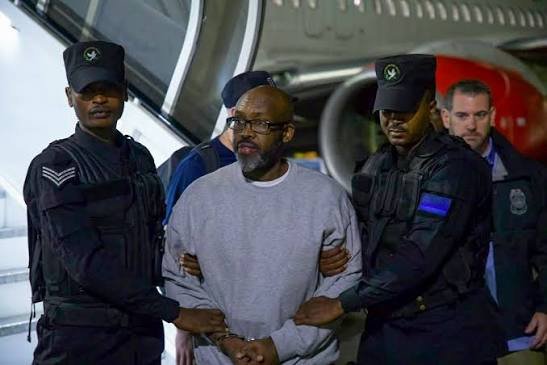
The United States has deported Rwandan national Jean Léonard Teganya to his home country, where he is expected to face prosecution over alleged involvement in the 1994 Genocide against the Tutsi.
Teganya, 55, arrived at Kigali International Airport on Monday evening, November 9, 2026, after being removed from the United States. Rwandan authorities confirmed that he was handed over to local officials and subsequently arrested.
The National Public Prosecution Authority (NPPA) said Teganya had been indicted in 2014 over alleged genocide and crimes against humanity committed in the former Butare prefecture, in southern Rwanda.
His return marks another development in Rwanda’s long-running efforts to bring people accused of participating in the 1994 atrocities back to the country to face justice.
According to the NPPA, Teganya is the eighth person accused of involvement in the genocide to be deported from the United States to Rwanda since 2007. The authority also acknowledged the cooperation of American judicial officials in securing his return.
Teganya’s deportation follows years of legal proceedings in Canada and the United States, including a criminal conviction in an American court over false statements made during immigration proceedings.
Who is Jean Léonard Teganya?
Teganya was born in 1971 and was studying medicine at the National University of Rwanda in Butare when the genocide began in April 1994.
He was also undertaking practical training at the University Teaching Hospital of Butare, now located in Huye District.
The allegations against him relate largely to events at the hospital and university accommodation during the genocide. US prosecutors presented evidence at his 2019 trial linking him to the National Republican Movement for Democracy and Development (MRND), the political party that governed Rwanda at the time, and the Interahamwe militia associated with it.
According to evidence presented by American prosecutors, Teganya allegedly helped soldiers and Interahamwe members identify Tutsi patients and refugees hiding inside the hospital. Those identified were subsequently taken away and killed, prosecutors said.
The prosecution also presented evidence linking him to the deaths of Tutsi civilians and students, as well as sexual violence against women who had sought shelter at the hospital.
These allegations were central to the evidence presented during his American trial. However, the US proceedings focused on immigration fraud and perjury rather than prosecuting him for genocide.
Teganya has denied involvement in the atrocities, according to reports on the case.
How he left Rwanda and reached the United States
Teganya left Rwanda in July 1994, towards the end of the genocide. His subsequent movements took him through several countries before he settled in Canada.
US court records indicate that he travelled through what was then Zaire, now the Democratic Republic of the Congo, as well as Kenya and India. He reached Canada in 1999 and applied for asylum.
Canadian authorities rejected his application, with decisions issued in 2002 and 2012. The proceedings centred on concerns about his alleged involvement in atrocities committed at the Butare hospital.
After years of immigration proceedings, Teganya was ordered to leave Canada. He did not comply with the deportation order and crossed into the United States on foot on August 3, 2014, near Houlton, Maine.
American authorities subsequently took him into custody after discovering that he had entered the country from Canada.
He then applied for asylum in the United States, but his statements about his background and activities during the genocide became the basis of a federal criminal investigation.
US court convicted him of immigration fraud and perjury
In 2017, federal prosecutors in Massachusetts charged Teganya with immigration fraud and perjury, accusing him of concealing information about his past when seeking immigration benefits.
The case went to trial in Boston, where prosecutors presented evidence about his alleged activities during the genocide. They argued that he had failed to disclose his political affiliations and conduct in Rwanda when dealing with US immigration authorities.
On April 5, 2019, a federal jury found him guilty on five counts: two counts of immigration fraud and three counts of perjury.
A judge later sentenced him to 97 months in prison on July 1, 2019. The court also found that he had obstructed justice by giving false testimony during the trial.
His convictions were subsequently upheld by a US appeals court.
It is important to distinguish the outcome of the American case from the allegations awaiting him in Rwanda. Teganya was convicted in the United States of immigration fraud and perjury, not genocide. The allegations concerning his conduct during the 1994 killings were presented as evidence in the immigration case, while Rwanda maintains a separate indictment against him.
Rwanda’s separate case against Teganya
Rwanda’s National Public Prosecution Authority said it indicted Teganya in 2014 over alleged genocide and crimes against humanity in the former Butare prefecture.
The authority’s announcement of his return did not provide a full account of the individual allegations contained in the indictment or specify all the next steps in the proceedings.
Reports indicate that Teganya was arrested after arriving in Kigali and was being questioned by Rwandan police before his case file could be passed to prosecutors.
His return therefore opens a new stage in the legal process, with Rwandan authorities now able to pursue the allegations under the country’s judicial system.
The prosecution will be required to establish the charges against him through the courts. His deportation and earlier American convictions do not, by themselves, establish his guilt in Rwanda’s separate genocide case.
US-Rwanda cooperation on genocide suspects
The deportation also highlights cooperation between the United States and Rwanda in investigating and pursuing people accused of serious crimes committed during the 1994 genocide.
Rwanda’s prosecution authority commended American judicial officials for their role in Teganya’s return. It also acknowledged wider cooperation on mutual legal assistance and efforts to ensure accountability for genocide-related crimes.
The United States has pursued cases involving individuals accused of human rights violations who are found living within its borders. In Teganya’s case, American authorities investigated his immigration claims and prosecuted him after determining that he had concealed information about his past.
The 1994 genocide lasted approximately 100 days, beginning in April of that year. Around 800,000 people, predominantly Tutsi, were killed, alongside moderate Hutu who opposed the violence.
More than three decades later, Rwanda continues to pursue people suspected of involvement in the killings, including individuals who left the country during or after the genocide.
What happens next?
With Teganya now back in Rwanda, attention will turn to the country’s prosecution authority and the judicial process surrounding the 2014 indictment.
Authorities have not publicly provided a detailed timetable for his court appearance or outlined every charge expected to be pursued.
His case is significant because it involves three different legal systems: Canada’s assessment of his asylum application, the US prosecution over immigration-related offences, and Rwanda’s separate allegations of genocide and crimes against humanity.
For Rwanda, his return represents another step in efforts to pursue suspects who left the country after the genocide. For Teganya, it means facing allegations that have remained part of the country’s legal proceedings for years.
The next stage will be determined by the evidence presented before Rwandan courts and the outcome of the judicial process.