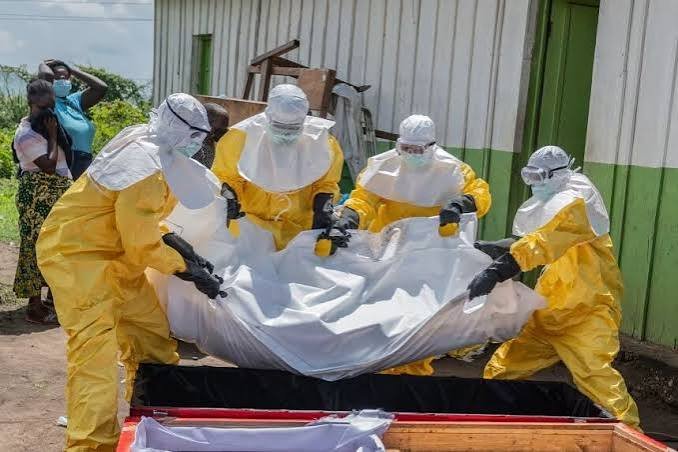
The death toll from the Ebola outbreak in the Democratic Republic of the Congo (DR Congo) has exceeded 5,000, marking a devastating milestone in the country’s worst recorded epidemic of the disease.
Government figures released on Friday, October 30, showed that more than 10,000 people had been infected since the outbreak was declared in May 2026. Despite ongoing efforts to contain the virus, health authorities are still struggling to stop transmission, with insecurity, delayed diagnosis and pressure on medical services making the response increasingly difficult.
The outbreak is being driven by the Bundibugyo strain of Ebola, a relatively rare form of the virus for which there are currently no approved vaccines or specific treatments. The situation has become a major regional concern after infections were reported beyond DR Congo, including in several other African countries.
Ebola outbreak becomes DR Congo’s deadliest on record
The latest figures place the current epidemic among the most serious Ebola emergencies ever recorded.
More than 10,000 infections and over 5,000 deaths have been reported in DR Congo since May. The scale of the outbreak has surpassed previous Ebola epidemics in the country, making it the deadliest the nation has experienced.
It is also the second-largest Ebola outbreak recorded globally, behind the 2014–2016 West African epidemic. That crisis affected more than 28,600 people and claimed over 11,000 lives, mainly in Guinea, Liberia and Sierra Leone.
The current outbreak has spread to eight of DR Congo’s 26 provinces, demonstrating how difficult it has become for authorities to contain the disease across the country’s vast territory.
The figures also highlight the seriousness of the Bundibugyo strain, which has presented health officials with significant challenges because of the absence of approved vaccines and targeted treatments.
Conflict and weak healthcare systems complicate response
Several factors have contributed to the continued spread of Ebola in DR Congo.
Delayed detection of infections has made it harder for medical teams to identify cases early and prevent further transmission. In some communities, patients may not receive medical attention quickly enough, increasing the risk of infections spreading among relatives, neighbours and healthcare workers.
Insecurity has created another major obstacle. Armed conflict in parts of eastern DR Congo has restricted access to affected communities, making it difficult for response teams to carry out surveillance, provide treatment and monitor people who may have been exposed to the virus.
The country’s already strained healthcare system is also under pressure. Limited medical resources and difficulties reaching remote communities have complicated efforts to respond to the growing number of infections.
Violence against health personnel has further weakened the response. An attack in Tshopo province recently killed a nurse and seriously injured another health worker who was responding to an Ebola alert, according to the World Health Organization.
Ebola spreads beyond DR Congo
The crisis is no longer limited to DR Congo, as infections have been identified in neighbouring countries and beyond.
Kenya and Uganda have reported cases, while Nigeria recently confirmed an infection, becoming the fourth African country to report an Ebola case during the current outbreak.
The spread has prompted governments to strengthen border surveillance and introduce additional precautions for travellers arriving from affected areas.
The international dimension of the outbreak has raised concerns about further transmission, particularly through informal border crossings and travel routes that may be difficult to monitor.
The US Centers for Disease Control and Prevention (CDC), in its situation update dated October 28, listed 10,305 confirmed cases and 4,996 confirmed deaths across the countries reporting infections. These figures are based on its confirmed-case reporting and may differ from the latest government figures cited in reports about DR Congo.
Saudi Arabia introduces travel restrictions involving Kenya
Concerns about cross-border transmission have also led some governments to introduce travel restrictions.
Saudi Arabia announced on Friday that it was suspending travel to and entry from Kenya, according to the Saudi Press Agency.
The restrictions include a suspension of travel by Saudi citizens to Kenya and a temporary halt to issuing all categories of visas to travellers from the country.
Saudi authorities are also restricting entry for passengers arriving from Kenya, including people who have travelled through another country after spending time in Kenya or other Ebola-affected countries within the previous 21 days.
The measures follow earlier restrictions introduced in June involving DR Congo, Uganda and South Sudan.
The decision reflects growing international concern about the possibility of infected travellers carrying the virus across borders before symptoms are identified.
Why the Bundibugyo strain presents a major challenge
The current epidemic involves the Bundibugyo virus, one of the species responsible for Ebola disease.
Unlike some other Ebola species, for which vaccines and specific treatments have been developed and approved, there are currently no approved vaccines or specific treatments for Bundibugyo virus disease.
This makes early detection, isolation, supportive medical care and infection-prevention measures particularly important.
Health authorities also face the challenge of maintaining public confidence in affected communities. Cooperation from residents is essential for identifying suspected cases, tracing contacts and ensuring that people seek medical attention when symptoms develop.
The World Health Organization has previously warned that insecurity and difficulties accessing healthcare can increase the risk of continued transmission.
Regional cooperation becomes increasingly important
With the death toll now above 5,000, DR Congo faces an urgent challenge in bringing the epidemic under control.
The spread into neighbouring countries has made coordination between African governments, international health organisations and border authorities increasingly important.
Improved surveillance, faster diagnosis, protection for healthcare workers and access to affected communities will be essential to limiting further infections.
For Nigeria and other countries reporting cases, the developments also underline the importance of maintaining preparedness, monitoring suspected infections and strengthening public health systems.
The latest figures serve as a reminder that the Ebola crisis is not only a national emergency for DR Congo but also a wider regional health threat. Until transmission is brought under control, the risk of further infections across Africa remains a major concern.