Algeria has maintained its position as Africa’s fourth-largest economy, with its gross domestic product (GDP) projected to reach approximately $331.9 billion in 2026, according to the International Monetary Fund’s (IMF) latest economic estimates.
The North African country remains one of the continent’s major economic powers, supported largely by its extensive oil and natural gas reserves. Its latest ranking places it behind South Africa, Egypt and Nigeria, while keeping it comfortably ahead of neighbouring Morocco in terms of nominal economic output.
Figures published in the IMF’s October 2026 World Economic Outlook place Algeria’s economy at $331.89 billion. Morocco, by comparison, is projected to record a GDP of approximately $195.63 billion, leaving a difference of about $136 billion between the two neighbouring countries.
The figures reinforce Algeria’s importance in Africa’s economic landscape, particularly in the energy sector, where its oil and gas exports remain a major source of government revenue and foreign exchange.
However, the country’s continued reliance on hydrocarbons also presents a long-term challenge as policymakers seek to expand other industries and reduce the economy’s exposure to fluctuations in international energy prices.
Algeria Maintains Its Position Among Africa’s Five Largest Economies
Algeria’s latest economic standing places it firmly among Africa’s five biggest national economies by nominal GDP.
The 2026 projections put South Africa in first place, followed by Egypt and Nigeria. Algeria occupies fourth position, while Morocco completes the top five.
These countries account for a substantial share of Africa’s total economic output, although their economic structures and sources of growth differ considerably.
South Africa benefits from established financial services, manufacturing and mining industries. Egypt combines a large domestic market with manufacturing, tourism and services, while Nigeria’s economy draws on energy, telecommunications, agriculture and a wide range of service industries.
Algeria’s position, meanwhile, reflects the importance of its natural resources, especially natural gas and petroleum.
The country’s large energy reserves have helped it maintain a significant economic presence in Africa and strengthen its role as a supplier to international markets.
Nevertheless, a country’s position in a GDP ranking does not automatically indicate that its citizens enjoy higher living standards or that its economy creates sufficient employment. Population size, income distribution, inflation and the cost of living also influence economic conditions.
Nominal GDP measures the value of goods and services produced within a country at current prices, converted into US dollars. Exchange-rate movements can therefore affect a country’s dollar-denominated GDP even when domestic production has not changed by the same proportion.
Oil and Gas Continue to Drive Algeria’s Economic Strength
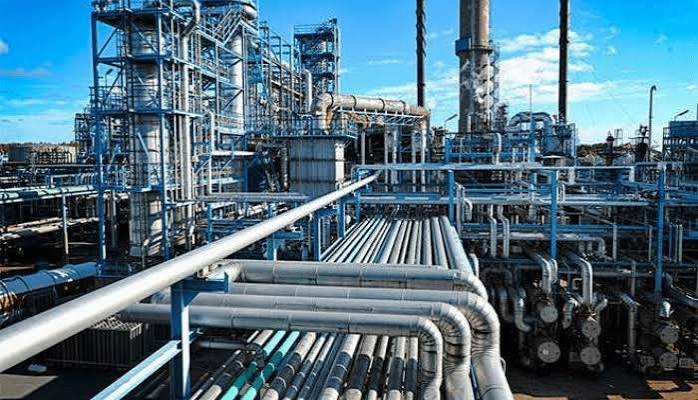
Algeria’s energy industry remains central to its economic performance, with petroleum and natural gas exports providing a substantial portion of government revenue and foreign currency earnings.
The country is also an important natural gas supplier to Europe, giving it a strategic position in international energy markets. Its geographical proximity to European consumers and established export infrastructure help sustain its role in regional energy trade.
According to the IMF assessment cited in the latest report, Algeria’s economy is projected to grow by 3.8% in 2026.
Public investment and revenue from the energy sector are expected to support economic activity. However, the outlook also highlights concerns about persistent budget deficits and rising public debt.
These pressures make it important for the government to strengthen revenue sources outside the oil and gas industry while ensuring that public expenditure delivers sustainable economic benefits.
Greater investment in agriculture, manufacturing and other productive sectors could help Algeria create employment opportunities and reduce its vulnerability to changes in global commodity prices.
Algeria and Morocco Follow Different Economic Strategies
Although Algeria maintains a considerable advantage over Morocco in total GDP, the two countries have adopted different approaches to economic development.
Algeria’s economic model remains closely linked to energy production, while Morocco has increasingly invested in manufacturing, industrial exports and international supply chains.
Morocco has developed a substantial automotive industry, attracting international manufacturers and expanding its capacity to produce vehicles and components for overseas markets.
The country is also pursuing opportunities in electric vehicle battery production, aerospace and renewable energy. These investments are intended to broaden its industrial base and reduce dependence on traditional sources of economic activity.
Morocco’s automotive exports reached approximately 157 billion dirhams, equivalent to around $17 billion, in 2024. Further investments in manufacturing facilities are expected to strengthen the country’s position in international markets.
Despite its smaller economy, Morocco’s industrial expansion demonstrates how investment in export-oriented production can support economic diversification.
The difference between the two countries is therefore not simply about the size of their economies. It also reflects their respective approaches to generating revenue, attracting foreign investment and building long-term economic resilience.
Economic Diversification Remains a Major Challenge for Algeria
Algeria’s fourth-place ranking highlights its economic importance, but maintaining that position over the long term will depend partly on how effectively the country addresses its structural challenges.
Heavy reliance on oil and gas exposes government finances to changes in global energy prices. A decline in international prices could reduce export earnings and put pressure on public spending.
The IMF has identified stronger non-oil revenue collection and more efficient government expenditure as important priorities for improving the country’s fiscal position.
Expanding private-sector activity could also help create jobs, encourage entrepreneurship and increase the contribution of non-energy industries to national output.
Agriculture, manufacturing and services offer potential opportunities, although sustained progress would require investment, improved business conditions and policies that encourage productive activity.
Morocco faces its own economic difficulties, including unemployment, water scarcity and exposure to changes in demand from European markets. Its growing manufacturing sector does not eliminate these risks, but it provides additional sources of export earnings beyond traditional industries.
For Algeria, the challenge is to use the revenue generated by its natural resources to build a more diversified economy capable of sustaining growth even when energy markets weaken.
What Algeria’s GDP Ranking Means for Africa
Algeria’s position among Africa’s largest economies underscores the continuing importance of natural resources in shaping the continent’s economic landscape.
The latest projections show that Africa’s biggest economies rely on different combinations of energy, manufacturing, financial services, agriculture and domestic consumption.
While a high GDP ranking reflects the overall value of economic production, it does not necessarily translate into higher household incomes, lower unemployment or improved living standards for every citizen.
The long-term performance of these economies will also depend on their ability to attract investment, improve infrastructure, expand employment and build industries that can compete internationally.
For Algeria, continued energy exports provide a significant economic foundation. However, the country’s ability to diversify production and strengthen public finances will be important in determining whether it can maintain sustainable growth in the years ahead.
With a projected GDP of $331.9 billion in 2026, Algeria remains Africa’s fourth-largest economy. Its next major challenge is to turn its energy wealth into broader economic opportunities while reducing its dependence on oil and natural gas.