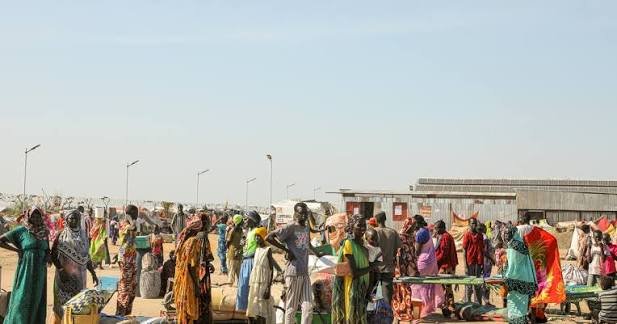
More than 324,000 people have crossed from South Sudan into Sudan since April 2025, with escalating violence and political instability driving thousands of families to seek safety across the border, according to figures released by the United Nations refugee agency.
The arrivals include more than 223,000 Sudanese nationals returning to their country and approximately 101,000 South Sudanese citizens seeking refuge. The figures highlight the complex movement of people across a region where conflict, insecurity and humanitarian emergencies continue to affect millions.
The United Nations High Commissioner for Refugees (UNHCR) reported that 324,631 people entered Sudan from South Sudan over the 18-month period. The movement has continued even as Sudan itself remains engulfed in a devastating conflict.
The figures present a challenging humanitarian picture for Sudan, where authorities and aid organisations must respond to the needs of incoming refugees and returning citizens while essential services and infrastructure remain under severe pressure.
Violence in South Sudan Forces Families to Seek Safety
According to UNHCR, growing insecurity in South Sudan has contributed significantly to the movement of people into Sudan.
Clashes involving armed groups intensified in late February 2025, initially causing substantial displacement in Upper Nile State before violence spread into Jonglei State. The deteriorating security situation in Jonglei increased the risks faced by civilians, prompting more people to cross into neighbouring Sudan.
The border movement includes South Sudanese nationals escaping insecurity as well as Sudanese citizens returning home after spending time across the border.
However, their journeys do not necessarily mean that they have reached a place of lasting safety. Sudan continues to face its own conflict-related challenges, meaning some arrivals may encounter limited access to food, shelter, healthcare and other essential services.
The situation also creates additional demands for humanitarian organisations already working to assist displaced communities in both countries.
Sudan Hosts Nearly 910,000 Refugees
Despite its ongoing war, Sudan continues to receive people fleeing insecurity in neighbouring countries. UNHCR estimates that the country is currently hosting nearly 910,000 refugees, including approximately 689,000 people from South Sudan.
The latest cross-border movement adds to the pressure on communities and humanitarian facilities in areas receiving new arrivals.
White Nile State has received the largest share of people arriving from South Sudan, accounting for approximately 52% of the influx. Blue Nile State received about 20%, while South Kordofan and West Kordofan accounted for 11% and 10%, respectively.
White Nile has also become a major destination for Sudanese nationals returning from across the border. The state received 210,965 Sudanese returnees, while Blue Nile recorded 20,238. Other returnees have settled in South Kordofan and West Kordofan.
The concentration of arrivals in these areas means that local authorities and humanitarian agencies face mounting demands for accommodation, food, clean water, sanitation and medical assistance.
Millions of Sudanese Return Home Despite Difficult Conditions
The movement from South Sudan is taking place alongside a broader return of Sudanese citizens to their home areas.
An International Organization for Migration (IOM) report published on September 21 estimated that approximately 5.1 million Sudanese had returned to their homes.
Many of these returns followed improvements in security after the Sudanese army regained control of Khartoum, Gezira, Sennar and parts of North Kordofan.
However, returning home does not necessarily mean that families can quickly rebuild their lives. Years of fighting have damaged infrastructure, disrupted economic activity and weakened public services in many communities.
The lack of employment opportunities and the depreciation of Sudan’s currency have also made it difficult for returnees to meet their basic needs.
Humanitarian organisations have warned that some families who have gone back to their communities could be forced to move again if living conditions fail to improve. The shortage of essential services remains a major obstacle to stable resettlement.
For many returnees, the immediate priority is finding secure accommodation, accessing food and healthcare, and establishing a reliable source of income.
Humanitarian Needs Grow in White Nile and Blue Nile States
The UNHCR report identified significant gaps in humanitarian assistance, particularly in areas receiving large numbers of new arrivals and returning residents.
In White Nile State, shortages of sanitation and hygiene facilities remain a serious concern. In some communities, inadequate sanitation has contributed to open defecation, increasing exposure to waterborne illnesses, including cholera.
Limited access to safe water and appropriate sanitation facilities can create additional health risks for displaced families, particularly children and people living in crowded settlements.
Blue Nile State faces its own difficulties. Food assistance remains inadequate for some families, while many people lack proper shelter and essential household items.
These shortages underline the challenges facing humanitarian agencies as they attempt to support both refugees and Sudanese returnees.
The continuing movement of people is increasing pressure on services that are already struggling to meet existing needs. Without additional assistance, vulnerable households may face worsening living conditions and greater health and protection risks.
The scale of the needs also highlights the importance of coordinating support across the affected states so that assistance reaches communities experiencing the greatest shortages.
Conflict Continues to Complicate Recovery Efforts
Sudan’s humanitarian situation remains closely connected to the wider conflict that has disrupted lives, damaged infrastructure and displaced millions of people.
Although the return of some residents reflects changes in security conditions in areas recaptured by the army, significant economic and humanitarian challenges remain.
Rebuilding homes, restoring public services and creating employment will be essential if returning families are to remain in their communities. Without progress in these areas, some households may struggle to establish stable lives or could experience further displacement.
The arrival of people fleeing violence in South Sudan adds another layer to the crisis. Sudan must address the needs of its own conflict-affected population while providing protection and assistance to refugees crossing its borders.
The latest UNHCR figures therefore illustrate a regional humanitarian emergency in which insecurity in one country can intensify the challenges facing its neighbour.
For humanitarian organisations, the immediate task is to expand access to food, shelter, clean water, sanitation and other essential services. Longer-term recovery will also require improved security, functioning infrastructure and better economic opportunities.
With more than 324,000 people having crossed from South Sudan into Sudan since April 2025, the need for sustained humanitarian support remains pressing.