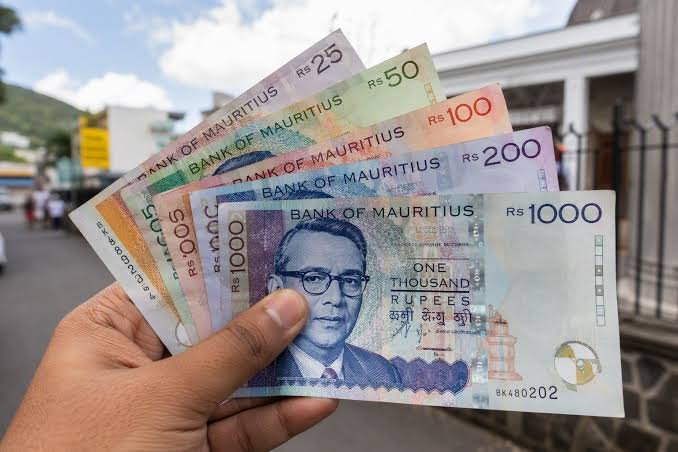
Mauritius, Seychelles and Botswana have emerged as Africa’s highest-ranked countries in a new global assessment of capitalist economic systems, highlighting their performance in areas such as market competition, banking and the movement of capital.
The ranking, known as the Global Capitalism Index, places Mauritius 48th worldwide, making it the highest-ranked African country in the assessment. Seychelles follows in 50th position, while Botswana occupies 52nd place.
The index was developed by researchers at the University of Virginia in the United States to examine how economic systems and institutions support market-based activity across 161 countries.
According to a report published by Africanews on October 13, 2026, the assessment draws on data covering the period from 2009 to 2025. It examines how easily businesses and investors can operate within different economies, considering factors that influence the movement of money, goods and investment.
Switzerland leads the worldwide ranking, followed by the United States and Hong Kong.
The results place several African economies among the stronger performers in the index, although their positions reflect the specific criteria used to assess capitalism rather than a complete measure of economic prosperity or living standards.
Mauritius Tops Africa’s Capitalist Economy Ranking
Mauritius ranks first among African countries in the Global Capitalism Index, securing 48th place globally.
The island nation has developed an economy with activities spanning financial services, tourism, trade and other business sectors. Its position in the ranking reflects the institutional and economic conditions considered by the index when evaluating market-based systems.
The assessment examines several characteristics of an economy, including the banking sector, the sophistication of financial markets, market competition and the freedom to transfer capital and trade goods.
These factors can influence how businesses access funding, attract investment and compete with other companies.
Mauritius’s position makes it the continent’s leading country in the latest assessment. However, the ranking should not be interpreted as proof that every aspect of its economy performs better than those of other African countries.
Instead, it indicates that the country performs comparatively well against the index’s measures of the institutions and conditions associated with capitalism.
Seychelles and Botswana Follow Closely
Seychelles ranks second in Africa and 50th globally, placing it just behind Mauritius in the assessment.
Botswana comes next, securing 52nd position worldwide. Together, the three countries form Africa’s top group in the new ranking.
Their positions draw attention to the different economic structures and institutional arrangements found across the continent.
The index considers whether market participants can move capital and goods, compete in business activities and operate within an environment supported by economic and legal institutions.
Such conditions are important because investors often consider the predictability of regulations, access to financial services and protection of property when deciding where to establish or expand businesses.
However, a strong ranking in a capitalism index does not automatically mean that a country has eliminated unemployment, poverty or inequality. Those challenges require separate measures and assessments.
The findings instead provide a comparative view of how the three countries perform in relation to the particular features of capitalism measured by the researchers.
Other African Countries Feature in the Ranking
Beyond the top three, several other African countries also secured places among the continent’s stronger performers.
Namibia ranked 59th globally, followed by Cape Verde in 66th place. Rwanda occupied 74th position, while Morocco ranked 85th.
These results demonstrate that the continent’s market systems differ considerably in their structures, institutional arrangements and economic environments.
The rankings also provide a starting point for comparing the conditions under which companies operate across different African markets.
For businesses seeking investment destinations, factors such as access to banking, the ability to move funds, competition and the reliability of institutions can affect operating decisions.
Nevertheless, companies must also consider other practical issues, including infrastructure, workforce skills, consumer demand, taxation and political or regulatory risks. A country’s position in one index cannot capture every factor relevant to investment.
For policymakers, the findings may encourage further discussion about the institutional reforms and economic conditions that support competitive markets.
What the Global Capitalism Index Measures
The Global Capitalism Index was designed to compare the characteristics of economic and institutional systems across 161 countries.
Its underlying data cover 2009 to 2025, allowing the researchers to assess a range of conditions associated with the operation of market economies.
Among the areas considered are banking, competition between businesses, and the movement of goods and capital. These indicators help researchers evaluate the extent to which individuals and companies can participate in markets with fewer restrictions.
The index defines capitalism in terms of the ability to deploy capital through open markets while limiting unnecessary constraints imposed by public or private actors.
This approach focuses on the environment in which economic activity takes place, rather than simply measuring the size of a country’s economy.
Consequently, the ranking is different from lists that compare countries by gross domestic product, average income, economic growth or human development.
A country may perform strongly in supporting market activity without necessarily recording the highest incomes or the fastest economic growth. Likewise, a lower position does not, on its own, establish that a country is economically unsuccessful.
The index should therefore be understood as one tool for examining economic systems, rather than a definitive judgment on the overall quality of life or development in each country.
Switzerland Leads the Global Ranking
While Mauritius occupies the highest position in Africa, Switzerland leads the worldwide table.
The United States ranks second, with Hong Kong in third place.
Their positions place three major international financial and commercial centres at the top of the assessment.
The ranking highlights the importance of market institutions, financial systems and the conditions governing economic exchange within the framework used by the researchers.
For African economies, the results offer an opportunity to examine how domestic policies and institutions compare with those of other countries.
However, improving a country’s position would not necessarily require simply reducing government involvement in every area of the economy. Policymakers would need to consider the index’s individual indicators alongside national priorities, including economic inclusion, public services and long-term development.
A balanced assessment would also examine how market reforms affect ordinary citizens, small businesses and workers, rather than focusing exclusively on investment conditions.
What the Ranking Means for Africa
The latest Global Capitalism Index places Mauritius, Seychelles and Botswana at the forefront of Africa’s market-oriented economies, with Namibia, Cape Verde, Rwanda and Morocco also featuring among the continent’s higher-ranked countries.
The findings provide a framework for comparing the economic institutions and market conditions of African nations.
For investors, such assessments can offer useful background information, although they should be considered alongside broader economic data and country-specific risks.
For governments, the rankings may prompt further examination of how banking systems, competition, regulation and institutional reliability influence business activity.
Ultimately, the index measures a particular dimension of economic organisation. It does not establish which country is the richest, the most developed or the best place to live.
Its significance lies in offering a comparative assessment of the conditions that allow markets to function and capital to move across economies.