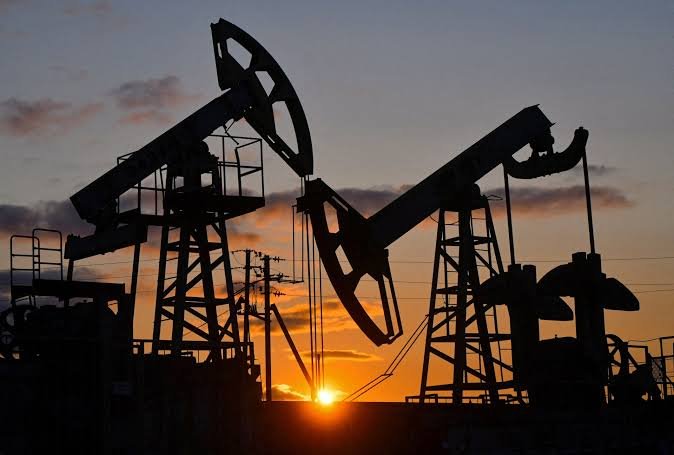
Global oil prices declined on Friday, October 9, 2026, after US President Donald Trump indicated that Washington would not launch an attack on Iran before next month’s midterm elections, easing some fears of further disruptions to international energy supplies.
The latest movement in the oil market followed Trump’s statement that the United States was holding productive discussions with Tehran to resolve the conflict, which has disrupted energy supplies and increased uncertainty across global markets.
Brent crude futures dropped by 92 cents, or 0.9 per cent, to $103.36 per barrel by 0632 GMT. Meanwhile, US West Texas Intermediate (WTI) crude fell by 75 cents, or 0.8 per cent, to $90.74 per barrel.
Despite Friday’s decline, Brent remained on course for a weekly gain after rising by approximately four per cent on Thursday. WTI, however, was heading towards a slight weekly loss.
The price movement reflects the sensitivity of energy markets to developments in the Middle East, where the conflict and threats to oil shipments have raised concerns about the availability of crude and refined petroleum products.
According to Reuters, traders are weighing the possibility of progress in diplomatic negotiations against continuing risks to production and transportation.
Trump Rules Out Immediate Attack on Iran
Oil prices came under downward pressure after Trump said the United States did not intend to attack Iran before the November 3 congressional midterm elections.
His comments followed media reports suggesting that Washington had been considering military action against Tehran before the vote.
The US president also described discussions with Iran as productive, raising hopes that diplomatic efforts could help contain the conflict and reduce the threat of additional supply disruptions.
The war has become a major source of uncertainty for energy markets, particularly because of the importance of the Persian Gulf to international oil transportation.
For investors, the possibility of reduced military tensions offers some reassurance that the situation may not deteriorate further in the immediate future.
However, Trump’s comments do not guarantee that the conflict will end soon or that oil shipments will return to normal. Market participants are likely to remain cautious until negotiations produce tangible results.
The continuing uncertainty means that oil prices could experience further fluctuations as traders react to political announcements, security developments and changes in supply.
Iran Reviews US Response on Strait of Hormuz
Diplomatic discussions have also focused on the Strait of Hormuz, one of the world’s most important routes for transporting crude oil and petroleum products.
Iranian Foreign Minister Abbas Araqchi was reported by Iran’s Tasnim news agency as saying that Tehran was reviewing a US response to an Iranian proposal that would reopen the strategic waterway within seven days.
The development has attracted attention because disruptions in the strait can affect the movement of large volumes of energy supplies to international markets.
Before the war, shipments passing through the Strait of Hormuz accounted for approximately 20 per cent of global oil and fuel trade.
Any prolonged interruption could therefore have serious consequences for import-dependent economies, oil refiners and consumers.
The prospect of reopening the waterway could help reduce concerns about shortages and improve confidence among traders and shipping companies.
Nevertheless, the situation remains uncertain. Market analysts have cautioned that diplomatic progress must be accompanied by improved maritime security before the risk premium associated with Middle Eastern oil supplies can decline significantly.
US Maintains Economic Pressure on Tehran
Despite signs of diplomatic engagement, Washington continues to apply economic pressure on Iran.
The United States announced fresh sanctions on Thursday targeting individuals, networks and 17 vessels accused of transporting Iranian crude oil, petroleum products and petrochemicals.
The measures form part of Washington’s broader efforts to pressure Tehran over the conflict.
The sanctions demonstrate that diplomatic discussions are taking place alongside continuing economic restrictions, rather than marking a complete shift towards normal relations.
For the oil market, this creates a complicated picture. Hopes of a diplomatic breakthrough may put downward pressure on prices, while sanctions and shipping restrictions can limit supply flexibility and keep prices elevated.
Traders must therefore consider both the possibility of easing tensions and the risk that further disagreements could intensify the disruption.
The uncertainty has contributed to significant price movements throughout the week.
Global Fuel Supplies Remain Under Pressure
Beyond the Middle East conflict, oil markets are dealing with several other developments affecting the availability of energy supplies.
The war in the region, combined with the Russia-Ukraine conflict, has disrupted international trade in refined fuels, including petrol, aviation fuel and diesel.
Diesel has been a particular concern because supply constraints can affect freight transportation, industrial activity and agriculture.
China, the world’s largest oil importer, is expected to resume refined fuel exports following a temporary pause during its Golden Week holiday.
The return of Chinese exports could provide some relief to international fuel markets by increasing the amount of refined products available to buyers.
However, the impact will depend on the volume of fuel exported and whether additional supplies can offset disruptions elsewhere.
The International Energy Agency has also agreed to accelerate the release of oil stocks under a plan introduced in March, while giving priority to diesel supplies.
Releasing strategic stocks can help countries manage temporary shortages and ease pressure on markets during periods of disruption.
Still, such measures may not fully compensate for prolonged interruptions to production or transportation.
Hurricane Isaias Disrupts US Oil Production
Oil prices are also being influenced by Hurricane Isaias, which has affected production operations in the Gulf of Mexico.
According to figures cited by Reuters from the US Marine Minerals Administration, producers had shut down approximately 1.3 million barrels of daily oil output as of Thursday. That represented around 62.9 per cent of current production in the affected area.
The shutdown has introduced another supply risk into an already unsettled market.
When severe weather threatens offshore facilities, producers may temporarily suspend operations to protect workers and infrastructure. Production can then remain offline until inspections establish that facilities are safe to restart.
The length of the interruption will determine how significantly the storm affects overall supply.
While the decline in prices on Friday reflected easing concerns about a potential US attack on Iran, the hurricane-related production losses could help limit further price reductions.
This illustrates the competing forces currently influencing the market: hopes of diplomatic progress are easing some fears, while weather disruptions and geopolitical risks continue to support prices.
What Falling Oil Prices Mean for Consumers and Businesses
Changes in international crude prices can influence fuel costs, inflation and business expenses, although the effect on consumers varies from country to country.
For oil-importing economies, a sustained decline in crude prices could reduce the cost of purchasing petroleum products from international suppliers. It may also ease pressure on foreign exchange reserves and transportation expenses.
In countries such as Nigeria, however, international crude prices are only one factor affecting the pump price of petrol and other fuels. Exchange rates, shipping costs, refining expenses, distribution charges, taxes and domestic market conditions can also influence retail prices.
Consequently, Friday’s decline does not automatically mean motorists will immediately pay less for fuel.
For airlines, manufacturers and logistics companies, lower oil prices could eventually reduce operating costs if the decline continues and is reflected in the prices of refined products.
On the other hand, renewed military tensions or further supply disruptions could quickly reverse the market’s direction.
Oil Market Outlook Remains Uncertain
The latest decline in oil prices suggests that traders have responded positively to the prospect of avoiding an immediate escalation between Washington and Tehran.
However, the market remains vulnerable to developments involving the Strait of Hormuz, US sanctions, regional security and the progress of negotiations.
Additional supplies from China and the release of strategic oil stocks may help ease pressure on refined fuel markets, but disruptions caused by the conflict and Hurricane Isaias continue to present risks.
For now, traders are likely to focus on whether diplomatic engagement produces measurable improvements in shipping safety and energy flows.
Until there is greater clarity, oil prices could remain volatile, with political announcements and supply disruptions continuing to shape movements in the international energy market.