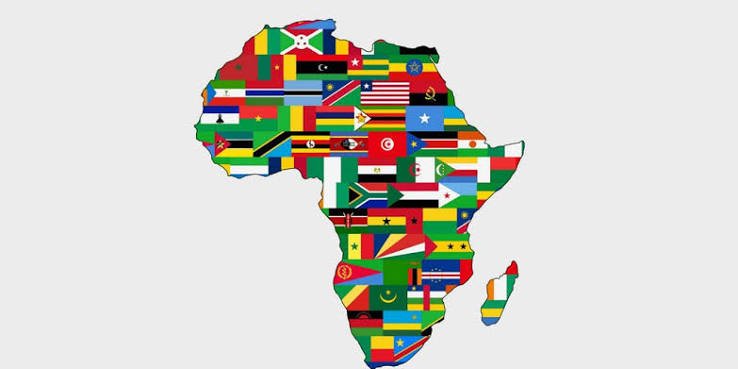
Africa is home to some of the world’s fastest-growing economies, major natural-resource producers and increasingly important financial and tourism centres. While countries such as Nigeria, Egypt and South Africa have some of the continent’s largest economies by total GDP, the picture changes when wealth is measured on a per-person basis.
One common way of comparing countries is GDP per capita, which divides a country’s economic output by its population. Based on 2026 projections from the International Monetary Fund’s April 2026 World Economic Outlook, the following are the 10 top richest African countries by nominal GDP per capita.
1. Seychelles
Seychelles ranks first among African countries, with projected GDP per capita of about $17,675 in 2026.
The island nation has a relatively small population and an economy strongly connected to tourism, financial services and other service industries. Its tourism sector remains an important source of foreign exchange, while its location in the Indian Ocean has helped make it an attractive destination for international visitors and investors.
2. Mauritius
Mauritius comes second with an estimated GDP per capita of $13,812.
The country’s economy has developed beyond its traditional dependence on sugar production. Tourism, financial services, manufacturing and business services now play important roles in the economy.
The IMF has described Mauritius as resilient, although it has also highlighted challenges including fiscal pressures, external imbalances and the need to improve productivity.
3. Gabon
Gabon is projected to record GDP per capita of approximately $9,918 in 2026.
The Central African country’s economy has long been supported by oil, alongside other natural resources. Its relatively small population compared with its resource base contributes to its high GDP-per-capita figure.
However, GDP per capita should not automatically be interpreted as a measure of how income is distributed among citizens.
4. Botswana
Botswana ranks fourth, with projected GDP per capita of around $8,490.
Diamonds have historically played a major role in the country’s economy, providing government revenue and export earnings. Botswana has also worked to diversify its economy and develop sectors beyond mineral resources.
The country’s economic performance can nevertheless be affected by fluctuations in the global diamond market.
5. Equatorial Guinea
Equatorial Guinea occupies fifth place with projected GDP per capita of about $8,152.
Oil and gas production transformed the country’s economy and significantly increased national income. However, the country’s relatively small population means its GDP per capita can appear high even though economic benefits are not necessarily distributed evenly across society.
6. South Africa
South Africa is sixth on the 2026 list, with estimated GDP per capita of approximately $7,503.
The country’s economy is one of Africa’s most diversified, with major industries including mining, manufacturing, financial services, retail, agriculture and tourism.
South Africa also remains one of the continent’s most important financial and commercial centres. The IMF projects real GDP growth of about 1.1% for 2026.
7. Libya
Libya ranks seventh, with projected GDP per capita of roughly $6,962.
The country’s economy is heavily dependent on hydrocarbons, particularly crude oil. Changes in oil production and international energy prices can therefore have a significant effect on Libya’s economic performance.
Its GDP-per-capita ranking should also be considered alongside the country’s political and economic challenges.
8. Cabo Verde
Cabo Verde has a projected GDP per capita of about $6,670, placing it eighth in Africa.
The island nation has developed a service-oriented economy in which tourism plays a major role. Its geographic position and expanding tourism industry have helped support economic activity despite its limited natural-resource base.
9. Algeria
Algeria ranks ninth, with projected GDP per capita of approximately $6,628.
As one of Africa’s largest countries, Algeria has a sizeable economy supported heavily by oil and natural gas. Energy exports remain important to government revenue and foreign exchange earnings.
The country has also pursued efforts to broaden its economic base and reduce excessive dependence on hydrocarbons.
10. Namibia
Namibia completes the top 10 with projected GDP per capita of approximately $5,573.
Mining is central to the Namibian economy, with diamonds, uranium and other minerals contributing significantly to exports. Tourism and services are also important parts of the country’s economic structure.
According to the IMF’s 2026 data, Namibia’s projected real GDP growth is about 2.4%, while its nominal GDP is estimated at around $17.31 billion.
What Does Being a “Rich” Country Mean?
The phrase 10 top richest African countries can be misleading if it is interpreted as meaning that every citizen in these countries is wealthy.
GDP per capita is an average. It does not show how national income is distributed, the cost of living, poverty levels, unemployment or differences in household wealth.
For example, a country can have a relatively high GDP per capita because of oil, minerals or a small population while still experiencing significant inequality.
It is also important to distinguish nominal GDP per capita from GDP per capita based on purchasing power parity (PPP). PPP adjusts for differences in local prices and therefore can produce a significantly different ranking. The IMF’s 2026 PPP figures, for instance, place Egypt much higher than its position under nominal GDP per capita.
Overall, the 2026 nominal GDP-per-capita figures show the diversity of Africa’s economies. Small island economies such as Seychelles and Mauritius perform strongly, while resource-rich countries such as Gabon, Botswana and Equatorial Guinea also rank highly. Larger and more diversified economies, including South Africa and Algeria, feature alongside them.
The ranking is based on 2026 projections, so figures can change as economic conditions, exchange rates, population estimates and IMF forecasts are updated.