At least nine people have reportedly been killed in violent clashes in the Ethiopian border town of Moyale, while around 2,500 people have crossed into neighbouring Kenya to escape the unrest, raising concerns about the growing humanitarian impact of the violence.
The fighting began on Wednesday, October 21, amid tensions involving Oromo and Somali communities in southern Ethiopia. Residents reported that gunfire was still audible on Friday, October 23, as families sought safety across the border.
The developments have placed pressure on local authorities and aid organisations in the Kenyan town of Moyale, where displaced people are seeking shelter and essential supplies. The latest casualty figures were provided by a hospital official in Ethiopia, while a Kenyan county commissioner confirmed the arrival of thousands of displaced people.
Hospital Reports Rising Death Toll
A hospital official on the Ethiopian side of Moyale told Reuters that approximately 30 injured people had been admitted for treatment since the violence started. Many of the patients were reportedly wounded by heavy weapons.
According to the official, who spoke anonymously, four patients died on Thursday, followed by five more on Friday. This brought the reported death toll to at least nine.
The figures reflect casualties recorded at the hospital and may not represent the full number of people killed or injured across the affected area. The overall scale of the violence remains uncertain as reports continue to emerge from the border region.
The continuing reports of gunfire have also raised fears that additional civilians could be caught up in the clashes if the situation deteriorates further.
Thousands Cross Into Kenya Seeking Safety
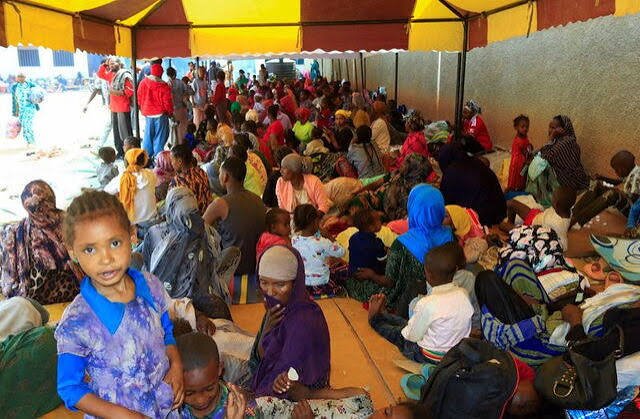
The violence has triggered a significant movement of people from Ethiopia into Kenya. Stanley Kamande, the county commissioner for Marsabit, said at least 2,500 displaced Ethiopians were staying in the Kenyan town of Moyale by Friday.
The number was substantially higher than the initial reports of people crossing the border earlier in the week. Many of those fleeing are looking for protection among relatives, residents and host families, while others need temporary accommodation and emergency assistance.
The arrival of so many people in a short period has increased demand for food, clean drinking water, shelter and medical services. Local authorities and humanitarian organisations are working to respond to the immediate needs of the displaced population.
The number of people who have been forced to leave their homes but remain inside Ethiopia has not been clearly established.
Kenya Red Cross Begins Emergency Relief
The Kenya Red Cross has launched an emergency response to support households affected by the cross-border displacement. Its initial operation is targeting 1,000 households with essential supplies and humanitarian assistance.
Relief items include tents, blankets, sleeping mats, water containers and kitchen equipment. The response also includes fortified porridge flour intended to support vulnerable groups, including young children and pregnant or breastfeeding women.
The scale of the movement means that aid agencies may need to reassess their requirements as more information becomes available. Emergency teams must also identify people with urgent medical needs and families who may have been separated during their escape.
For displaced households arriving with few possessions, access to basic supplies can make an immediate difference while they wait for the security situation to become clearer.
Violence Reaches the Kenyan Side of the Border
The unrest has also created risks for people living in Kenya. A Kenyan police report reviewed by Reuters said a local woman in Moyale was struck in the neck by a stray bullet.
She was taken to a private hospital, where the bullet was removed. The report said she was in stable condition.
The incident illustrates the danger posed by violence near an international boundary, particularly in a town where communities and commercial activities operate on both sides of the border.
The fighting has also been associated with damage to property in Ethiopian Moyale. Reuters verified footage showing a bulldozer burning at a petrol station and people overturning fuel-dispensing equipment. However, the available evidence does not establish who was responsible for the damage.
Tensions Between Communities Under Scrutiny
Residents have described the clashes as involving Oromo and Somali communities. The two groups live in parts of Ethiopia where disputes over territory, administration and regional boundaries have contributed to tensions in the past.
However, the immediate trigger for the latest outbreak of violence has not been conclusively established in the reporting available so far. It is therefore important to distinguish the reported involvement of communities from any unverified claims about who initiated the clashes or bears responsibility for particular incidents.
Further information from local authorities and other reliable sources will be needed to clarify how the confrontation began and whether steps are being taken to prevent further violence.
Border Security and Humanitarian Concerns Grow
Moyale is an important crossing between Ethiopia and Kenya, supporting trade, transport and family connections across the frontier. Prolonged insecurity could disrupt local businesses and movement while placing additional pressure on public services in the Kenyan border town.
For Kenyan authorities, the immediate challenge is to monitor security conditions while ensuring that people escaping danger can access essential humanitarian assistance. Aid organisations, meanwhile, need to assess the needs of displaced families and prepare for the possibility that more people could arrive.
The situation remains fluid, and the casualty and displacement figures could change as further information emerges.
For now, the reported deaths, hospital admissions and arrival of approximately 2,500 Ethiopians in Kenya highlight the serious consequences of the clashes. A clearer picture of the crisis will depend on further reporting from the affected communities, medical facilities and authorities on both sides of the border.