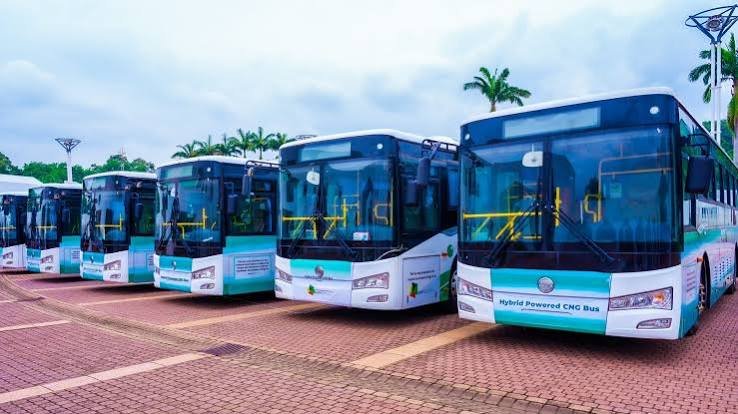
The Federal Government has renewed efforts to expand the use of compressed natural gas (CNG) vehicles across Nigeria, setting its sights on deploying one million vehicles as part of a wider plan to reduce transportation costs and ease the financial pressure on commuters.
Minister of State for Petroleum Resources (Gas), Ekperikpe Ekpo, announced the renewed push in Abuja while receiving progress updates from officials of the Presidential Initiative on Compressed Natural Gas and Electric Vehicles (PI-CNG & EV) and the Decade of Gas Secretariat.
Ekpo urged the agencies to speed up investment, expand refuelling facilities and strengthen vehicle-conversion programmes so that more commercial transport operators can switch from petrol to natural gas. The government wants the initiative to deliver practical benefits for Nigerians, particularly through lower fares following the removal of the petrol subsidy.
The target comes as households and businesses continue to grapple with high transport expenses, which affect the cost of commuting, moving goods and distributing food across the country.
Government Pushes for Faster CNG Adoption
The minister said Nigeria’s substantial natural gas reserves provide an opportunity to develop a more affordable transport system while increasing the domestic use of the country’s energy resources.
He called on the agencies responsible for the programme to identify the main obstacles slowing adoption and prioritise interventions that can expand access to CNG. These include improving the availability of refuelling stations, supporting vehicle conversions and encouraging greater participation from private investors.
The initiative is part of the government’s broader effort to reduce the country’s dependence on petrol and diesel for transportation. By encouraging vehicles to run on natural gas, authorities hope to lower fuel expenses for operators and create room for cheaper fares.
However, achieving the one-million-vehicle target will require more than encouraging motorists to switch fuels. It will also depend on a reliable gas supply, accessible conversion centres, sufficient refuelling infrastructure and the willingness of transport operators to pass savings on to passengers.
CNG Seen as a Route to Cheaper Public Transport
Compressed natural gas has become a key part of Nigeria’s alternative-fuel strategy because it can cost less than petrol when compared on an equivalent energy basis.
For commercial drivers, lower fuel expenses could help reduce the cost of operating buses, taxis and other passenger vehicles. The government hopes that expanding CNG use will eventually translate into more affordable fares for commuters, many of whom have struggled with higher transport bills since the removal of petrol subsidies in 2023.
Nevertheless, cheaper fuel does not automatically guarantee cheaper journeys. Operators must also account for vehicle maintenance, financing, wages and other running costs. Whether passengers benefit will depend partly on how transport unions, fleet owners and government-backed services implement fare reductions.
In September, President Bola Tinubu said the government was working with state governors and other stakeholders to ensure that savings from alternative fuels reached commuters. He cited examples from several states where government-supported CNG or electric transport services had reduced fares.
The latest push suggests that the Federal Government wants to expand these efforts and make alternative-fuel transport available to a larger share of the population.
Refuelling Stations and Conversion Centres Remain Crucial
One of the major challenges facing wider CNG adoption is ensuring that drivers can conveniently refuel their vehicles.
Without sufficient stations, motorists may be reluctant to pay for conversions, particularly if they have to travel long distances to access natural gas. Expanding the refuelling network will therefore be essential to the government’s one-million-vehicle ambition.
Conversion facilities are equally important. Vehicles designed to run on petrol may require specialised equipment and technical work before they can safely use CNG. Making conversion services more accessible and affordable could encourage more drivers to participate.
The Presidential Initiative on CNG and Electric Vehicles is expected to work with industry stakeholders to expand investment and improve access to these services. A joint market study conducted by the Decade of Gas Secretariat is also intended to help identify infrastructure gaps and guide the programme’s next steps.
Private-sector participation will be particularly important because the scale of the target requires investment across several parts of the natural gas and transport industries.
Nigeria’s Gas Resources Could Support Economic Growth
The government is also presenting the CNG programme as a way to make greater use of Nigeria’s domestic energy resources.
Ekpo said the country’s extensive gas reserves offer opportunities to support transportation, industrial activity and wider economic development. Increasing domestic gas consumption could help stimulate investment in supply infrastructure, vehicle technology and related services.
A successful expansion could create opportunities for local businesses involved in vehicle conversions, equipment supply, station construction and maintenance. It could also encourage new investment in gas distribution and transport services.
However, the economic benefits will depend on whether infrastructure development keeps pace with demand and whether the fuel remains accessible to ordinary drivers and transport businesses.
Will Nigerians See Lower Transport Fares?
The key test for the programme will be whether the expansion of CNG vehicles results in measurable savings for passengers.
For commuters, the number of vehicles converted matters less than the fares they pay every day. If operators reduce their fuel expenses but continue charging the same prices, the benefits to households may be limited.
The government will therefore need effective coordination with state authorities, transport unions and commercial fleet owners to ensure that lower operating costs lead to more affordable journeys.
The one-million-vehicle target is an ambitious step in Nigeria’s effort to reduce transport costs through alternative energy. But its success will depend on sustained investment, dependable refuelling infrastructure, affordable conversions and a clear system for monitoring fare reductions.
For now, the government has renewed its commitment to expanding CNG use. Nigerians will be watching to see how quickly that commitment translates into cheaper and more accessible transportation.