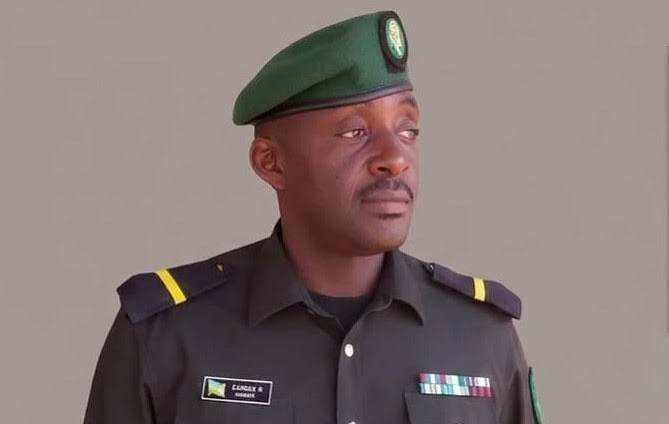
Ugandan police have launched a murder investigation after the body of Robert Kabera, a former Rwandan army officer who became a vocal critic of President Paul Kagame, was discovered without its head in a village outside Kampala.
Kabera’s remains were found on Saturday, October 17, 2026, in the Kamengo area of Mpigi District, south-west of the Ugandan capital. Police said the victim had been identified by relatives, but his head had not been recovered and investigators had yet to establish a clear motive for the killing.
The killing has raised fresh concerns about the safety of Rwandan dissidents living outside their home country. Kabera fled Rwanda in 2020 and later became known for online commentary critical of Kagame’s government.
Ugandan authorities have not publicly identified suspects or established who was responsible. There is also no confirmed evidence linking the killing to the Rwandan government.
Police Investigate Killing of Former Rwandan Soldier
Ugandan police spokesperson Kituuma Rusoke confirmed that investigators were examining the circumstances surrounding Kabera’s death. Local residents and members of his family helped identify the body, according to police.
The remains were discovered in a bush near Luwala village in Mpigi District. Investigators believe the killing may have occurred late on October 16 or during the early hours of October 17, although the precise circumstances remain unclear.
Police have said Kabera’s previous military service is among the details being examined as detectives work to reconstruct the events leading to his death.
The missing head presents a further challenge for investigators, who must establish the circumstances of the killing and identify those involved.
Authorities have not announced arrests in connection with the case, and the motive remains unknown.
The investigation is particularly sensitive because Kabera had become an outspoken opponent of Rwanda’s leadership after leaving the country.
Who Was Robert Kabera?
Kabera, around 50 years old, previously served in Rwanda’s military and was also known as a musician with the Rwandan Army Jazz Band.
His life took a different direction after he left Rwanda for Uganda in 2020. Once in exile, he began speaking more openly against Kagame’s administration and developed an audience through his YouTube channel, Major Robert TV, which had approximately 144,000 subscribers. The channel featured hundreds of videos, including commentary on Rwandan politics.
Kabera’s online activity made him a recognisable voice among some Rwandans following political developments from abroad. He also featured a song praising opposition figure Victoire Ingabire, who has faced repeated imprisonment in Rwanda.
After Kabera left the country, Rwanda’s military announced in November 2020 that it was investigating allegations of unlawful sexual contact involving a family member. Kabera denied the allegations and said he had fled because he feared persecution.
His family has disputed the circumstances surrounding the accusations. His brother, Victor Agaba, told AFP that Kabera had not experienced problems with people in Uganda and described the case initiated against him in Rwanda as a “witch-hunt.”
These competing accounts form part of the background to Kabera’s life in exile, but investigators have not established whether any of them are connected to his killing.
Family and Fellow Dissidents Seek Answers
Kabera’s death has intensified anxiety among Rwandans living in exile, particularly those who openly criticise the government in Kigali.
For relatives, the immediate priority is understanding what happened and ensuring that the people responsible are identified and prosecuted. For other dissidents, the killing has renewed concerns about whether they can safely continue their political activities while living abroad.
Uganda hosts Rwandans who have left their country for different reasons, including political disagreements and fears about their personal safety. The discovery of Kabera’s body has raised questions about the protection available to people who believe they may be at risk.
However, the circumstances of this particular killing remain under investigation. Police have not publicly established a political motive, and allegations that the Rwandan government was involved have not been proven.
The investigation will be important in determining whether Kabera was targeted because of his political views or whether other factors contributed to the crime.
Killing Renews Attention on Previous Deaths of Rwandan Exiles
Kabera’s death has drawn comparisons with earlier cases involving Rwandan opposition figures and former officials who died abroad.
Patrick Karegeya, a former Rwandan intelligence chief who became a critic of Kagame, was found strangled in a Johannesburg hotel room in South Africa in 2014. Karegeya had helped establish the opposition Rwanda National Congress (RNC) after falling out with Rwanda’s leadership.
In 2021, former Rwandan army lieutenant Revocat Karemangingo was shot dead in Mozambique. Seif Bamporiki, another Rwandan opposition figure, was also killed by gunfire in South Africa that year. Former general Faustin Kayumba Nyamwasa, who helped establish the RNC, has said he survived several assassination attempts while in exile.
These incidents have contributed to longstanding concerns about the safety of Rwandan opponents living abroad. Critics of Kagame have accused his government of targeting dissenters, including people who have left the country.
The Rwandan government denies targeting political opponents. No evidence publicly available in the current investigation has established that Rwandan authorities were responsible for Kabera’s death.
Kagame’s Leadership Remains a Subject of Debate
Paul Kagame has led Rwanda since the aftermath of the 1994 genocide, first as the country’s de facto leader and later as president from 2000. His administration is credited by supporters with rebuilding state institutions, developing infrastructure and promoting economic growth after the genocide devastated the country.
At the same time, human rights organisations and political opponents have criticised Rwanda over restrictions on political opposition, independent media and freedom of expression. The government has rejected accusations that it systematically targets critics.
Kabera’s killing has brought these broader concerns back into focus, particularly the risks faced by people who challenge Rwanda’s leadership from neighbouring countries.
Nevertheless, the political context should not be mistaken for proof of responsibility in an individual crime. Establishing who killed Kabera and why will depend on the evidence gathered by Ugandan investigators.
What Happens Next in the Investigation?
Ugandan police face the task of establishing the sequence of events before Kabera’s death, locating any additional evidence and determining whether the killing was politically motivated.
Key questions remain unanswered: who was responsible, what prompted the attack, where the missing head is located, and whether anyone helped plan or carry out the crime.
The investigation could also have implications for the security of Rwandan exiles in Uganda if evidence establishes that Kabera was targeted because of his political activities.
For now, authorities have not announced a confirmed motive or publicly named suspects. The Rwandan government had not issued an immediate public comment on Kabera’s death in the reports published on October 19 and 20, 2026.
Kabera’s killing has left his family seeking answers and renewed concern among dissidents living outside Rwanda. Whether the case reveals a political motive or another explanation will depend on the findings of the ongoing investigation.